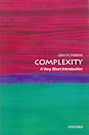
John Oldman is a respected university professor, who resigns just as his career seems to be in the ascendant.
He tries to sneak away, but his friends drop round to his cabin to throw him a farewell party.
They can’t understand why he is leaving, and pester him for a reason.
Eventually he agrees to tell them:
he’s an immortal Cro Magnon who has to keep moving on since he doesn’t age.
Initially his friends assume he is joking,
but as the story lengthens, they start to think him mad,
or maybe even start to believe him…
This is almost entirely dialog taking place in a single room,
and is utterly gripping.
Is he joking?
As he and his friends point out, there is no way to prove what he is saying.
But the story keeps building.
One thing that makes John sound so believable is the serene way he both tells his story,
and reacts to the jibes and questions of his friends.
Could only someone who has lived as long as he claims, and been taught by the teachers he mentions,
be so mellow?
Although filmed in 2007, this was conceived and written by Jerome Bixby somewhat earlier.
I think that, with today’s technology, some of Oldman’s claims could indeed be substantiated:
a DNA test might help demonstrate his stated age;
some antibody tests might help demonstrate he had suffered the various ancient diseases he mentions.
So he is even more right to keep hidden!
For all my film reviews, see
my main website.
Wednesday, 15 April 2020
Tuesday, 14 April 2020
Covid-19 diary : online ordering
Went onto Amazon to order more of a consumable item that I’ve been buying for a while now.
Click Add to basket, quantity 1
Error message: Minimum order 2.
The item appears in my basket, but with quantity zero.
Increase the order quantity to 2.
Error message: This seller has a limit of 1 per customer.
The item now appears in my basket with quantity 1.
Proceed to checkout.
Error message: Minimum order 2.
The item now appears in my basket with quantity 2.
Proceed to payment.
(At least it didn’t get into a loop.)
Click Add to basket, quantity 1
Error message: Minimum order 2.
The item appears in my basket, but with quantity zero.
Increase the order quantity to 2.
Error message: This seller has a limit of 1 per customer.
The item now appears in my basket with quantity 1.
Proceed to checkout.
Error message: Minimum order 2.
The item now appears in my basket with quantity 2.
Proceed to payment.
(At least it didn’t get into a loop.)
Monday, 13 April 2020
book review: Complexity: a very short introduction
Labels:
books,
complexity,
Game of Life,
review
John Henry Holland.
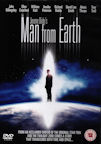
Complexity: a very short introduction.
OUP. 2014
When I saw that John Holland had written “A Very Short Introduction” to complexity, I was excited, and snapped up a copy. Given Holland’s stature in the field, I was looking for a good distillation of concepts, and, maybe, a suitable introduction for my students.
Unfortunately, I cannot recommend this book. This is for two main reasons. Firstly, it is riddled with errors. Secondly, the part on Complex Adaptive Systems, or CAS (as opposed to the somewhat simpler Complex Physical Systems, or CPS), appears to be a summary of Holland’s own work in the area, not the more general introduction I was looking for.
The first issue is more of a problem. Here are a few examples. On p.7, Holland discusses von Neumman’s cellular automaton (CA) replicator, a complex pattern that can replicate itself, then references figure 1, which shows a glider from Conway’s Game of Life CA. On p.11, he says that CPS tend to be modelled using partial differential equations (despite most of his examples being discrete space and time CAs), then states that the theory of partial differential equations (PDEs) is additive, that is, linear (and says this again on p.25); by p.13 he is talking about PDEs being used to describe chaotic (necessarily non-linear) systems. On p.15 he states that the Koch snowflake fractal curve is “everywhere discontinuous”, rather, it is everywhere continuous, but nowhere differentiable. And so on.
Okay, so maybe the part on CAS is better than the part on CPS, because that’s his area of expertise? But no. Take figure 6, which has two parts, one a set of rules, and the other supposedly a network representation of the behaviour of those rules. Except that the two parts don’t fully correspond, and the hash notation in the rules (a wildcard) is nowhere explained; the figure as it stands is unintelligible. Furthermore, this specific formulation of rules is Holland’s own model of CAS, which would be absolutely fine in a book about his model, but not so much in a general introduction.
I gave up reading soon after this point. Even if there are some interesting insights (and I’m sure they must be) how can they be picked out from the mass of erroneous statements, and the potentially over-specific model presented? Unfortunately, this book will have to go back on my shelf; I will not be recommending it to my students, or to anyone else.
For all my book reviews, see my main website.
Complexity: a very short introduction.
OUP. 2014
When I saw that John Holland had written “A Very Short Introduction” to complexity, I was excited, and snapped up a copy. Given Holland’s stature in the field, I was looking for a good distillation of concepts, and, maybe, a suitable introduction for my students.
Unfortunately, I cannot recommend this book. This is for two main reasons. Firstly, it is riddled with errors. Secondly, the part on Complex Adaptive Systems, or CAS (as opposed to the somewhat simpler Complex Physical Systems, or CPS), appears to be a summary of Holland’s own work in the area, not the more general introduction I was looking for.
The first issue is more of a problem. Here are a few examples. On p.7, Holland discusses von Neumman’s cellular automaton (CA) replicator, a complex pattern that can replicate itself, then references figure 1, which shows a glider from Conway’s Game of Life CA. On p.11, he says that CPS tend to be modelled using partial differential equations (despite most of his examples being discrete space and time CAs), then states that the theory of partial differential equations (PDEs) is additive, that is, linear (and says this again on p.25); by p.13 he is talking about PDEs being used to describe chaotic (necessarily non-linear) systems. On p.15 he states that the Koch snowflake fractal curve is “everywhere discontinuous”, rather, it is everywhere continuous, but nowhere differentiable. And so on.
Okay, so maybe the part on CAS is better than the part on CPS, because that’s his area of expertise? But no. Take figure 6, which has two parts, one a set of rules, and the other supposedly a network representation of the behaviour of those rules. Except that the two parts don’t fully correspond, and the hash notation in the rules (a wildcard) is nowhere explained; the figure as it stands is unintelligible. Furthermore, this specific formulation of rules is Holland’s own model of CAS, which would be absolutely fine in a book about his model, but not so much in a general introduction.
I gave up reading soon after this point. Even if there are some interesting insights (and I’m sure they must be) how can they be picked out from the mass of erroneous statements, and the potentially over-specific model presented? Unfortunately, this book will have to go back on my shelf; I will not be recommending it to my students, or to anyone else.
For all my book reviews, see my main website.
Friday, 10 April 2020
Covid-19 diary : bats
Today I learned that there are over 1200 species of bats, and that they make up about 20% of all mammal species.
So, one fifth of all mammal (species) can fly!
Tuesday, 7 April 2020
Covid-19 diary : pollution
So, the Covid-19 lockdown has reduced pollution noticeably, in more ways than one.
Less smog in China, less NOx in Europe (but unfortunately not dolphins in the clearer Venice canals).
And, something I’ve recently noticed – no spam phone calls!
Less smog in China, less NOx in Europe (but unfortunately not dolphins in the clearer Venice canals).
And, something I’ve recently noticed – no spam phone calls!
Monday, 6 April 2020
correcting proofs
Labels:
publishing
I’ve spent a couple of hours correcting proofs of a paper.
There were several … interesting … changes made by the typesetter.
But the one the really had me yelling at the screen was in some mathematical text. We had introduced an operator called redacted (well, it wasn’t actually called that, but I’m protecting the guilty here). We consistently used a sans serif font, to distinguish it from other terms.
In some places it had been changed to redacted. In some places it remained as redacted. And in other places it had been changed to redacted.
Aaaargh!!!
There were several … interesting … changes made by the typesetter.
But the one the really had me yelling at the screen was in some mathematical text. We had introduced an operator called redacted (well, it wasn’t actually called that, but I’m protecting the guilty here). We consistently used a sans serif font, to distinguish it from other terms.
In some places it had been changed to redacted. In some places it remained as redacted. And in other places it had been changed to redacted.
Aaaargh!!!
Sunday, 5 April 2020
Bach, the Universe & Everything
I was supposed to be in London today, giving a talk about Can a Bacterium Compute at the Orchestra of the Age of Enlightement’s “Bach, the Universe and Everything” event.
However, *gestures vaguely at world*.
The guys in charge organised a virtual event instead. I recorded my talk, which was a quite straightforward process, just requiring a webcam, a stepladder and a tripod. More impressively, the orchestra performed remotely, and individually. I assume each part was recorded separately, then mixed together for the broadcast performance. I rather like the montage of individual performers: you can see who is doing what, very interesting.
With the power of the web, you too can indulge in this virtual event, timeslipped from its original release. This might even reach more people than the planned live event would have.
However, *gestures vaguely at world*.
The guys in charge organised a virtual event instead. I recorded my talk, which was a quite straightforward process, just requiring a webcam, a stepladder and a tripod. More impressively, the orchestra performed remotely, and individually. I assume each part was recorded separately, then mixed together for the broadcast performance. I rather like the montage of individual performers: you can see who is doing what, very interesting.
With the power of the web, you too can indulge in this virtual event, timeslipped from its original release. This might even reach more people than the planned live event would have.
Subscribe to:
Comments (Atom)