Vicki Hearne.
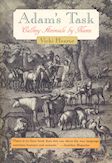
Adam’s Task: calling animals by name.
Akadine Press. 1986
This is a book about taking domesticated animals seriously: training them, respecting them, and treating them as creatures with their own complex, non-human internal lives. It provides a deeply fascinating account of how domesticated animals relate to humans, and of our responsibilities to them. It is mostly about mostly dogs and horses, told through a series of in-depth stories of particular animals Hearne has trained, plus a chapter on how different cats are.
It is also a book about building a philosophy of communication with domesticated animals. No behaviourism or anthropomorphism or sentimentality, but instead a deep understanding of their existence and differences.
This is a difficult book to summarise, but it is an engrossing read. I was completely hooked, and devoured it in just two sittings. It is an inspiring view into minds simultaneously alien, and yet co-evolved with our own, so that we can communicate meaningfully, if we take the time to learn how.
For all my book reviews, see
my main website.
Thursday, 9 July 2020
book review: Adam's Task
Labels:
books,
cat,
communication,
dog,
education,
evolution,
horse,
nature,
philosophy,
review
Wednesday, 8 July 2020
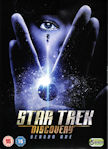
TV review: Star Trek Discovery season 1
Labels:
review,
science fiction,
space flight,
Star Trek,
TV
I recall when this first came out hearing a lot of fannish criticism, from the uniforms to the plot. I hadn’t heard whether that died down during the season or not. But we thought we’d give it a try anyway.
So, we are in the Star Trek universe, about 100 years after Enterprise, and 10 years before the Original Series. I’m not sure if it joins up with the original TV timeline, or the new movie series timeline (which I personally consider to be non-canon); maybe that never becomes clear. Michael Burnham, adopted daughter of Sarek and Amanda, is cashiered for mutiny at the start of the Klingon war with the Federation. Despite this, she ends up on board the starship Discovery, with its experimental spore drive, a key weapon against the Klingons.
This is not your typical light optimistic Star Trek. It unfolds into a dark season arc; it has a (deliberately) non-funny Harry Mudd episode, a “Groundhog Day” episode, a Mirror Universe episode, a lot of very nasty Klingons, a lot of very nasty Terrans, a captain acting dubiously, Starfleet acting dubiously, and more. It plays like grimdark non-canon Star Trek fanfic (what happened to the spore drive? why had we not seen Kelpiens before, or since?), yet also weaves in bits of early Original Series background.
It starts off slowly, but as the existence of the arc becomes established, the tension mounts. Characters die. Other characters are not what they seem. There are several jaw-droppingly unexpected moments. It’s really rather good.
Now for season 2…
For all my SF TV reviews, see my main website.
Sunday, 5 July 2020
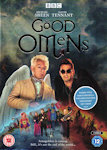
TV review: Good Omens
Labels:
philosophy,
review,
science fiction,
TV
The angel Aziraphale [Michael Sheen] and the demon Crowley (originally the snake Crawly) [David Tennant clearly having immense fun] have been on earth since the beginning of time (that is, about 6000 years), slowly become unacknowledged friends, and the only immortals around. But now time is up. The Antichrist has been born, and it’s Crowley’s job to make sure he’s placed with the American Ambassador, ready for Armageddon in a few years time. But Crowley messes up, and the boy is placed with a surburban British couple. Apocalyptic hijinks ensue.
This is Neil Gaiman’s adaptation of the book by him and Terry Pratchett (I haven’t read the book). Some might not feel it’s a good idea to watch an end of the world tale during a global pandemic lockdown, but it felt appropriate. There may be a few places where Gaiman is simply having too much fun, but on the whole this is a great series. It is clever, funny, scary, weird, sarcastic, touching, inventive, and wonderfully irreligious.
For all my SF TV reviews, see my main website.
Saturday, 27 June 2020
Saturday, 13 June 2020
not a shop
Labels:
education
There is a good discussion of what education is for, and how different disciplines use different tools, in the post How to speak truthfully about what it means to be human: a user’s handbook. All of it is interesting, but there is one paragraph that speaks forcefully about why students are not “customers”, itself a quote from another piece (my emphasis):
We go to school, not to get what we already know that we want, but because we want to receive an education. Here, we would expect teachers not just to give students what they know they want or say they want or are able to identify as what they want, but to move them beyond what they already know that they want. We want teachers to open up new vistas, new opportunities, and help children and young people to interrogate whether what they say they want or desire is actually what they should desire. To turn the student into a customer, and just work on the assumption that education should do what the customer wants is therefore a distortion of what education is about, a distortion that significantly undermines the ability of teachers to be teachers and of schools, colleges and universities to be educational institutions rather than shops.
Hear, hear.
Friday, 5 June 2020
Covid-19 diary: learning lessons from history
“Black Death, COVID, and Why We Keep Telling the Myth of a Renaissance Golden Age and Bad Middle Ages” is a brilliant essay by Renaissance scholar and all round Renaissance woman Ada Palmer, on why the question “If the Black Death caused the Renaissance, will COVID also create a golden age?” is based on multiple misconceptions about history in general, and the Renaissance in particular. However, there are things we can learn from history about how to tackle the Covid-19 aftermath, but will we?
The post is marvelous in general. But in particular, the concept of “Ever-So-Much-More-So” really struck a chord with me. As Palmer says, sprinkle some Ever-So-Much-More-So powder on the Middle Ages and you get the Renaissance: much more of the good bits, and much more of the bad bits.
And this just keeps on: the good things keep getting more and better, but the bad things keep getting more and worse. This is different from utopias (only the good things increase) or dystopias (only the bad increases): in the real future, everything gets Ever-So-Much-More-So. The optimists notice only the more good; the pessimists only the more bad. The reality is everything gets more complicated, more complex, more more. Ever-So-Much-More-So.
Tuesday, 2 June 2020
Covid-19 diary: online workshops
Labels:
conference,
York
We were due to run a small workshop in York on 25-26 March. Lockdown started on 23 March, but we had anticipated this, and moved the conference into a virtual format.
Here's a short report on how it went, and what we could do better next time.
Subscribe to:
Posts (Atom)