Showing posts with label Japan. Show all posts

Saturday, 11 October 2025

After ALife

My colleague and I travelled back to Tokyo on the bullet train this morning.  I had quite a bit of time before my flight, so he suggested we visit Electric Town.  We took a local train, then searched for some empty luggage lockers so we wouldn't have to wheel suitcases around.  All the coin-operated ones we found were full.  But we did find an alternative.

A very nice gentleman took our bags and gave us a ticket.

Divested of luggage, we walked around, marvelling at the sheer variety of stores selling everything electrical, electronic, technical, cutesy twee, and much that was unidentifiable.

A huuuge multistorey shop sold large expensive items, including mega-sized TVs, bicycles, telescopes, and sharks.

I've been to specialist telescope shops with fewer items on display.

Difficult to get a scale, but this was several feet tall.

At the other extreme, there were alleyways and arcades with tiny shops selling all kinds of electronics, from small boxes full of individual resistors and transistors, to crates full of old laptops.  Everything for the hobbyist.

One shop among hundreds.

It was lightly raining and getting dark: the combination of weather and goods made me feel like I was on the set of Bladerunner.  

After that, we retrieved our luggage, and I caught a train to the airport, to wait for my just after midnight flight home.  

I like the simplicity and clarity of the airport shop names.


The end of my third trip to Japan.


Friday, 10 October 2025

ALife 2025 day 5

The final day of the conference: it's been a great event.  The day yet again started with some parallel sessions of contributed papers, and I went to the session on Cellular Automata. I was chairing the session, so couldn't take a full set of notes, but I remember the talks being interesting.

Then the final keynote, by Anna Ciaunica, a philosopher, on the importance of embodiment: why we need our toes (and the rest of our body) to think.  We associate the mind with the brain; why not with the rest of the body? Why is the brain not a part of the body? Why do we have a "Brain and Body Institute", but not a "Liver and Body Institute"?  Why do we imagine Mary in her black and white world not understanding seeing red, rather than not understanding eating a red apple?  Why do we have an adult-centric neuro-centric bias, a male embodiment bias?  Think about pregnancy, not just from the mother's point of view, but from the point of view of the embryo: pregnancy is a universal experience, we have all been inside another person.  The opposite of death isn't life, it's birth.  We should think beyond autopoiesis to co-poiesis.  Currently our philosophical tools have been mostly invented by male philosophers.  Consider a parallel world, with a Renée Descartes, who is pregnant.

Well, after that mind-altering experience, it was time for the final boxed lunch.  And then the closing ceremony, bast paper awards, and thanks to everyone!

Next year, in Waterloo! 


Thursday, 9 October 2025

ALife 2025 day 4

The day again started with some parallel sessions of contributed papers: this time I went to some interesting ones on cellular automata and related topics.  Then was the day's keynote, by Blaise Agüera y Arcas, who, with colleagues at Google, is working on in silico ALife ideas.  He related some of their results to ideas of symbiogenesis from biology, with a strong dash of physical processes and lots of tasty equations.

one of Blaise's denser slides

Then another efficient lunch box distribution was followed by two further contributed paper sessions.  Here I chose one on Evolution, followed by one on Morphological computation.  Lots of interesting ideas I need to assimilate.

These were followed by a Panel session, where I was the moderator. I got to interview Emily Dolson, Dominik Chen, and Hiro Iizuka about all things ALife.  I enjoyed it; I hope the panellists and audience did too.

Then a bunch of us went to dinner.

Shop name spotted on the way back from the eatery


Wednesday, 8 October 2025

ALife 2025 day 3

The day started with some parallel sessions of contributed papers: I went to some interesting ones on evolution.  Then was the day's keynote, by Chris Kempes.  He covered a variety of physical constraints on living organisms: physical laws limit what life can be.  Scaling laws, metabolic rates and growth rates, the way proteins are more dilute in larger cells, the physics of the small: these are all consequences of physics, and so may be universal laws.

On to lunch, and then the excursion!  On registration, we were given a choice of several excursions to a variety of local temples.  I had little to guide my choice, except I saw the words "bamboo forest" on one, so chose that.  On the bus on the way there, the guide taught us to count to ten in Japanese (knowing what little I know of Japanese, I expect the reality is much more complicated than these ten little words!)

We walked from the bus park along a road of very touristy shops, to the temple complex.  We went in the main temple, after removing our shoes.  There was a magnificent painting of a dragon on the ceiling, with a gaze that followed you around the room, but sadly, there was also a no photography rule.  After that, shoes back on, we walked through the complex, admiring the outside of buildings, the raked gravel, and the carefully tended trees.

If you look carefully, you can see three guys up in this tree, pruning it. (Click to embiggen.)

We carried on around the garden, to a lovely lake, also carefully curated.  It's just a little too early in the year for the full spectacular autumn colours.

If you look carefully, you can see a big carp in the bottom right corner.

We carried on up around the garden, to a vista point.

Temples below, mountains in the distance, framed by trees. The tree on the right has amazing spikey leaves

spikey

On to the bamboo forest.  I wouldn't want to make my way through that; fortunately there was a nice wide path.

impenetrable
Bamboo is a kind of grass.  A special kind of grass.
a colleague providing a hand for scale

After exiting the forest, we descended back down the valley, and made our way back to the bus via an ice cream shop in the touristy road.  

The bus then took us directly to the conference dinner, held in a huuuuuge and very modern convention building.  We had a delicious buffet, and wonderful conversation.  There was a bus to take us back to the starting point, but the little group I was with decided to walk back down instead.  It made a very pleasant 30 minute stroll on a warm evening to finish off a great day.


Tuesday, 7 October 2025

ALife 2025 day 2

Tuesday, and the full conference gets going.  

We started with a great keynote from Hector Zenil, on using Kolmogorov Complexity measures.  Just because it is uncomputable doesn't mean it is useless.  Most of mathematics is undecidable, but that doesn't stop us using maths!  We shouldn't just give up and use simple lossless compression algorithms. We can do better, and getter better bounds, better approximations, by trying harder and harder (running the search algorithm for longer), which means we can be better at filtering out randomness from things that superficially look random, but that have algorithmic patterns.  It was a fascinating talk.  I've had Hector's book on Algorithmic Information Dynamics on my to-read pile for a while now -- I need to bump it up nearer to the top.

Then on to the contributed papers.  During one of these, on Synthetic Ecosystems, I became one of today's "Lucky 10,000", when I discovered that until relatively recently, Ascension Island was an essentially lifeless desert.  Darwin stopped there on his way home, and decided it needed "greening".  Today, after a lot of work, it has a lush, totally artificial, ecosystem!

The poster session has lots of interesting work on display, including a contribution by my student.  There were also some beautiful "Analogue Atomic Automata": large, carefully grown bismuth crystals, by Solvi Arnold:


In the evening we had a fascinating online keynote from Michael Levin, on biological embodiment, agential material, and bioengineering.  It might have been 8pm for us, but it was 7am for him!  (We live on a sphere.)


Monday, 6 October 2025

view from a Kyoto hotel window

Today was the first day of the Artificial Life conference in Kyoto.  I took the obligatory photo out of my window, then joined my colleague at breakfast.


Then off to find the conference venue, and join the registration queue (at essentially midnight UK time, but I felt fine, having slept reasonably well).  Queuing also involved saying hi to many friends and colleagues I hadn't seen since last year.  This first day was dedicated to workshops. I went to an excellent Neuroevolution tutorial in the morning.  The lunch queue was long, but moved quickly, as pre-packed food boxes were being briskly handed out.  

In the afternoon I went to a workshop on Generative ALife with a wide range of talks.  I was quite fascinated by the various talks using LLMs to implement the very simple agents in Minsky's Society of Mind.  Now, I'm an LLM mega-skeptic: these stochastic parrots are most definitely not "intelligent".  However, the whole point of SoM is that intelligence emerges from lots of unintelligent agents communicating. These researchers are using LLMs as SoM's internal agents, communicating via natural language. There are agents controlling the "mouth", which talks to/at people through a robot avatar; (these conversations still have typical "hallucination" issues), other agents are attached to the "ears", "eyes", etc, and more are just internal agents, making up the whole internal society.  In addition to the transcript of the robot/people conversations, the researchers can also get transcripts of the internal conversations between the internal agents, giving insight into how the agents are interacting to give the resulting output.  I found this an interesting novel use of these devices.

Then a bunch of us went out for dinner.

A great first day!

Sunday, 5 October 2025

travelling to Kyoto

I caught a Japanese Airlines flight from Heathrow early Saturday morning, to arrive in Tokyo early this Sunday morning.  The view as we were arriving had an interesting cloud.


We landed at Haneda airport after a 14 hour flight just a little late (due to a slightly delayed takeoff), to profuse apologies from the flight crew.  The next two hours shuffling slowly back and forth in the immigration queue with about 1000 other people were not fun.  But at least my luggage was ready for me after that.  

I next figured out how to buy a ticket for the monorail (I needed to pay cash for this, although every other type of ticket could be bought with a card).  I travelled to Hamamatsucho station, changed line, then on to Tokyo station.  I found a locker to hold my luggage, and had a coffee while I waited for a colleague who I had arranged to meet up with in Tokyo and travel with to Kyoto.  We explored a bit around the station, had lunch, then went and caught the Shinkansen bullet train to Kyoto.

The train was roomy, clean, busy, quiet, and on time.  It was also fast, but that was difficult to tell, as it was all so smooth.  

It is supposed to be possible to see Mount Fuji from the train, but it was too cloudy.

Not Mount Fuji, in the clouds.  Look at that blur in the foreground!

We arrived in Kyoto early evening, checked in to our hotel, then went out for a meal.  Sunday evening, many places were full.  But my colleague, who had been to Kyoto before, and knew some Japanese, found a lovely little place in a backstreet, where we ordered a set menu.  They kept bringing us lots of little plates of wonderful food, and I discovered I like wasabi, in small quantities. (I seem to have missed this staple on previous trips.)  The meal ended with a lovely desert of a variety of not-too-sweet ices.

Yes, I photographed my desert.

Back to the hotel, to recover from the journey, and prepare for the conference starting tomorrow.  Only an eight hour time difference, the "wrong" way; I'm sure that won't be a problem!


Saturday, 4 October 2025

no view from a lack of hotel window

I travelled down to Heathrow last night, to the hotel at T3, ready for my early flight to Japan today for the ALife conference.  I went to take a photo from the window, as usual.  No window!  I looked at the emergency exit floor map. No outside wall!  Okay.  Perfectly comfortable room, nonetheless.

That wall covering over the bed is not a blind: there is no window.


Thursday, 2 October 2025

A foolish consistency is the hobgoblin of little minds

I am off to the Artificial Life conference in Kyoto soon; I am filling in some online forms to save time in person later.  As is often the case, such forms want date of birth.  I am bemused by the day-of-month dropdown menu.


Saturday, 29 July 2023

Nakajima Park

My flight home today is a late evening one, so I had most of the day to kill first.  I had a look at a map, and decided to visit Nakajima Park, a few stops south on the metro from my hotel.

One reason I chose the park is the map showed it contains Sapporo City Observatory.

Aha! I spied an open door!  I walked up to it, and yes, it was open for viewing.  Not only that, but the telescope was configured to see the sun.  A Japanese gentleman welcomed me in, and indicated I should take a look.  It was a great view of a quite spotty sun.  Then he pointed to another eyepiece.  This had another filter enabling me to see several prominences.  Once he realised I knew what I was looking at, we had a nice little conversation about the telescope and some pictures on the wall taken with it.

After that pleasant interlude I continued my walk around the park.  There were many good views across the lake.


And there were more formal garden arrangements.

this must look magnificent when the wisteria is in bloom

It was very hot, so I found an ice cream place, and sat enjoying it, while being regaled with 1970s pop music.  Then, of course, I needed to find a public convenience.  I had discovered there are two styles: the over-the-top luxurious loos with heated seats and built in everything, and the holes in the ground.  The park had only the more primitive option.

the romance of travel

Then it was time for lunch, then back to the hotel to talk about neuromorphic computing with another colleague over iced coffee.

Ready to fly home tonight.


Thursday, 27 July 2023

Sapporo Art Park

The ALife conference is great!  I'm really enjoying the workshops, the presentations, and catching up with colleagues who I haven't seen in person since 2019.  (I'm not enjoying the heat so much, though.)

Today we got a break from the hard work, with an excursion to the Sapporo Art Park.  There were lots of things to view, but I (and many of my colleagues) spent quite a while in the interactive "Animals of Flowers" room.

Here, wriggling lizards and geckos and flowers and snakes and more were projected on to the walls and floor.  If you stamped on one, it emitted a load of flowers.

a projected critter

What I didn't realise at first, until I saw some surprising creatures, was that this was truly interactive: there were pieces of paper with outlines of the critters that you could colour in, give to a staff member to be scanned in, then watch your design come to life!

seems I'm not the only one who went to GECCO and ALife back to back!

It was surprisingly engaging: I found myself grinning widely at all the critters moving around and the exploding flowers.

They had closed the ice cream stall just before we left the installation.  Oh well.

Then it was off to the conference dinner and awards ceremony.


Sunday, 23 July 2023

view from a hotel window

Another day, another hotel in another country.  I barely had 36 hours at home after getting back from the GECCO conference in Lisbon, before leaving to travel to the Artificial Life conference in Sapporo, Japan.  I thought long and hard about whether this was a sensible thing to do, but I really really wanted to go to ALife: it's one of my favourites, and it hasn't been held in person since 2019.  So here I am, having arrived late last night, with a day off to recover from the 17 hours of flight (having to fly the long way keeping south to avoid flying over Russia; and with a change in Tokyo).

the hotel room, while about the same price as the one in Lisbon, is about a quarter the size

A colleague and I decided to find where the conference venue was, ready for the start tomorrow.  (This conference does not run over a weekend!)  It's a short walk form the hotel to the campus, which has a museum and cafe.  So we visited the museum too (and, obviously, the cafe).

This large mural tells the stories of some field trips to gather specimens.  These people were clearly bonkers.


The mural had an English translation, as did several of the exhibits, but not all.  So it wasn't often clear what the significance of some exhibits was.  That just added to the interest.

only just fits!

I'm looking forward to the conference starting tomorrow.


Sunday, 7 November 2021

sequestering carbon, several books at a time CXX

 The latest batch:


  • The Sandman boxed set is still in its clingwrap, so a bit fuzzy
  • The two Natural Computing series Springer volumes are complimentary copies: I have just joined the series editor team.  If you want to write or edit a book for this series, in the field of Unconventional Computing or Artificial Life, please contact me!


Sunday, 9 June 2019

time to go home

The view from the breakfast bar on the 25th floor, just before I check out to catch the airport bus.


Goodbye, Tokyo!  I had a great time.  An excellent conference, interesting new experiences, lovely people, and a marvellous city.


Thursday, 6 June 2019

boat and dinner

The conference outing and dinner was combined as a boat tour.

Prior to embarkation, we get a good view of the Tokyo Skytree.

As we turn back at the mid-point, we see we are not the only boat on the river.
The view of the Skytree on disembarking.

Sunday, 2 June 2019

view from a skyscraper

I’ve arived in Tokyo, after a 12 hour flight, ready for the Unconventional Computation conference starting tomorrow.

Rather than the traditional “view from a hotel window”, I was recommended the “view from a nearby skyscraper”.  So this is the view from the (free) Observation deck in the Tokyo Metropolitan Government Building, on the 45th floor, over Tokyo on a slightly hazy Sunday afternoon.

There are other skyscrapers around here

There is also greenery.  My hotel is the mere 25-storey white block in the centre, the one with the loads of teeny square windows.

One of the many raised roadways.  We have Spaghetti Junction, but Tokyo must be Noodle City!
(Relatively small) tower blocks receding to infinity.  Is this Trantor?

Later on, we went down past the famously huge Shinjuku station (which we will have to navigate tomorrow!) to find a place for dinner: there were plenty to choose from.

A warm Sunday evening in downtown Shinjuku

Wednesday, 6 February 2019

limericky

I came across this while clearing out some old papers.  It’s a variant of the liar paradox, as the last of four “limericks”.


There was a young girl from Japan
Whose limericks never would scan.
     When someone asked why
     She said with a sigh,
“It’s because I always attempt to get as many words in the last line as I possibly can.”

Another young poet from China
Had a feeling for rhythm much finer.
     His limericks tend
     To come to an end
Suddenly.

There was a young lady of Crewe
Whose limericks stopped at line two.

There was a young man of Verdun.


Wednesday, 22 March 2017

chiplessness

Interesting article on emotions, and how we can train them.
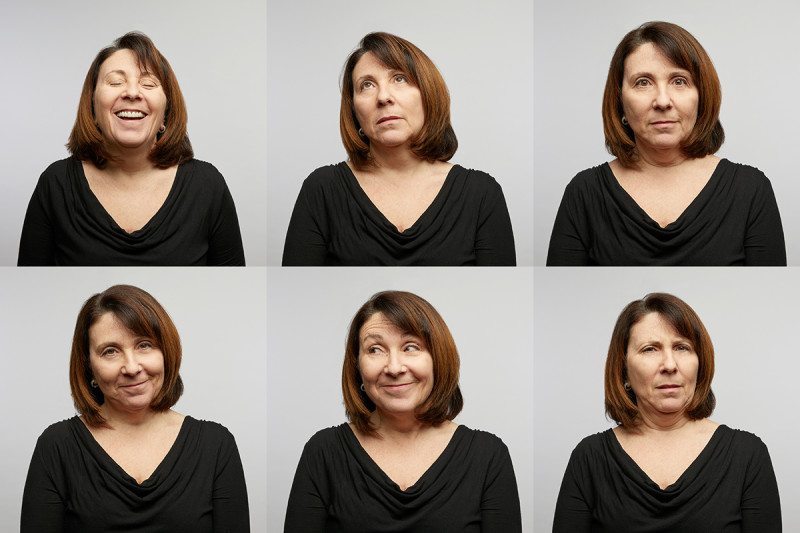
Emotions are not universal – we build them for ourselves 
Japan has arigata-meiwaku, the negative feeling when someone does you a favour that you didn’t want, are perhaps inconvenienced by, yet must still be grateful for.


For all my social networking posts, see my Google+ page


Update 23 March 2017:
A commenter says this article is behind a paywall. I didn't realise, as I subscribe to New Scientist.

So I'll provide a few more representative quotes.

Emotions are not hard-wired and universal:
If you look at the literature on facial expressions, most studies that support universality use a kind of psychological cheat – experimenters might force subjects to pick from a small set of emotion words when shown a facial expression, or unwittingly train subjects in the appropriate emotion concepts. 
My lab and others have shown that if you remove these cues, say, by asking subjects what a face means without a list of words to choose from, the whole effect falls apart. 
Thinking that they are causes damage to people:
The example that really gets me is the training of autistic children to recognise the stereotyped expressions stipulated by the classical view. This training is supposed to improve children’s social functioning. But nothing changes for these kids because these facial expressions don’t generalise outside the lab. 
Huge amounts of money are being spent on technology rooted in the idea that facial expressions are universal. For example, the US Transportation Security Administration spent $900 million on a method of reading faces and bodies that is rooted in the classical view. It didn’t work.
It's an incorrect stereotype:
... this stereotype is extremely damaging – there is evidence that when you refer to a woman as emotional, it usually means too emotional. So there’s a catch-22: if a woman is emotional, she’s seen as childish or out of control. If she’s not emotional enough – she defies the stereotype – she’s seen as a cold, untrustworthy bitch. For men the rules are not so strict. This is a real problem in courtrooms. There are people who can’t get a fair trial because jurors – and judges – accept the stereotype and believe that, generally, emotions can be easily read.
Reconstructing our own emotions can help us:
a student preparing for a test will be in a high arousal state. They might experience this arousal as anxiety, but they could learn to recategorise it as determination, which research shows will allow them to perform better on tests. This recategorisation can reduce stress, so they feel physically better too.
And there's a book:
Lisa Feldman Barrett. How Emotions are Made: The secret life of the brain. Houghton Mifflin Harcourt. 2017 


Friday, 22 July 2016

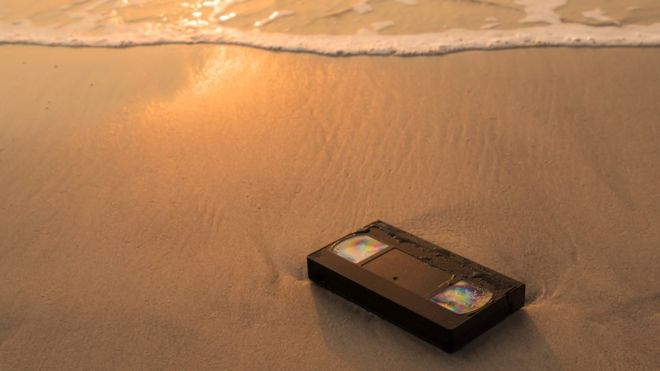
does anyone even remember what "VHS" stands for?

I saw them come.  I saw them go.

Japan 'to stop making VCR machines'

VCRs were used to play and record onto VHS cassettes


For all my social networking posts, see my Google+ page