Showing posts with label pedantry. Show all posts

Monday, 1 December 2025

ooo?

We went to see Wake Up Dead Man (Knives Out #3) in the cinema today.  It's only on for a week, because it is a Netflix film.  They need a cinematic release for it to be considered for awards, but want to minimise the time, so people will pay for it on Netflix.  We missed Glass Onion for this reason, and didn't want to miss out again.  (We don't do Netflix.)

It was excellent.  If you enjoyed the complexity, clues, and red herrings in Knives Out, this is just more so.

In the cinema foyer, there was an advert for Zootropolis 2 (the UK name for Zootopia 2).  The name caught my eye.  It seems to be a back formation from "metropolis".  But that is a combination of "metro" and "polis".  So really it should be Zoopolis 2?  But for a moment I thought the suffix was actually "opolis", in which case it would be Zooopolis 2.  I'm willing to believe this is the case, just to have a word with three consecutive "o"s.


Thursday, 9 November 2017

why not use trees?

BBC news headline: Plant captures CO2 out of the air.  Well, yes, that’s what they do!

Oh, okay.  So it’s not quite as snappy as the apocryphal newspaper headline Shell found on beach, but it requires the same sort of anti-default processing to understand.


For all my social networking posts, see my Google+ page

Thursday, 11 May 2017

April foolish grammar

And following up on bad grammar, I just received this email:
From 1st April 2017 average water and sewerage charges in our region will be rising in line with inflation. This means Yorkshire Water bills will remain some of the lowest in the country.
I fail to follow the implication as stated.  Surely that should read:
From 1st April 2017 average water and sewerage charges in our region will be rising in line with inflation. Despite this, Yorkshire Water bills will remain some of the lowest in the country.


For all my social networking posts, see my Google+ page

Friday, 28 October 2016

do this now

A nice arXiv paper “Good Enough Practices in Scientific Computing”, full of very sound advice, although I'd probably call it “The Theoretical Minimum Practices in Scientific Computing”.
Our intended audience is researchers who are working alone or with a handful of collaborators on projects lasting a few days to a few months, and who are ready to move beyond emailing themselves a spreadsheet named results-updated-3-revised.xlsx at the end of the workday. A practice is included in our list if large numbers of researchers use it, and large numbers of people are still using it months after first trying it out. We include the second criterion because there is no point recommending something that people won’t actually adopt.


[via Danny Yee’s blog]


For all my social networking posts, see my Google+ page

Saturday, 13 February 2016

#webdesignfails

Just submitted my water meter reading online.

So I log onto my account, and look for “submit reading”.  No luck.  Log off, and google “Yorkshire Water meter reading”.  Find a completely separate web page, where I have to re-enter my details (all things they know from my account details, but, hey).

And when I copy/paste my account number from my bill into this page, it flashes red, and says “please enter a valid account number”.  So I delete the spaces, and then it’s happy. (Hmm.  How much programming effort is it to strip white space from a string, I wonder?)


For all my social networking posts, see my Google+ page

Sunday, 9 August 2015

so how does averaging work?

Looking at BBC Weather forecast on my phone, I see it’s predicted to be nice and sunny this coming Wednesday:


When, though?  Mostly morning or afternoon, or maybe all day?  So I go to the detailed view:


Hmm.  I wonder what algorithm mangages to average this pattern of “light cloud” and “sunny intervals” to “sunny”?  Even not including the nighttime values, this seems a little optimistic.

Sunday, 21 June 2015

airports lie

I had a nice hop over to Amsterdam on Friday (flew out Thursday night, flew back Friday night) for an interesting Colloquium.

Here’s the obligatory photo from my hotel bedroom window, in the centre of Amsterdam:


There were three pieces of information about Schipol airport that, when taken together, could be have been problematical.

Easyjet boarding pass: Gate closes 30 minutes prior to departure
Board announcing departure gate initially: Gate is announced 40 minutes prior to departure
Board announcing departure gate later: walking time from here to gate, 26 minutes

Fortunately there are two lies in that information.
The gate opens less than 30 minutes prior to departure.
The walking time was more like 10 minutes.

However, I did spend a considerable amount of time walking around airports last week.

Saturday, 2 May 2015

book review: The Sweetness at the Bottom of the Pie

Alan Bradley.
The Sweetness at the Bottom of the Pie.
Orion. 2009

Flavia de Luce is a precocious 11 year old, youngest of three sisters, possessing a fully equipped and operational chemistry lab in a remote corner of her family home, and the time and inclination to use it. Neglected by their remote father, the de Luce children spend much of their time playing cruel practical jokes on each other, and Flavia’s chemical knowledge is put to these ends, brewing poisons. Until, that is, she discovers a body in the garden, and her father is arrested. She turns her skill to investigation, discovering dark secrets about her father’s schooldays, and his stamps.

Several things didn’t ring true for me. For example, Flavia smelled a chemical smell on the dying man’s breath, but didn’t recognise it right until the end, when the plot demanded it, despite it being a simple smell that her broad chemical knowledge should have identified immediately. In fact, this kind of thing is used a lot: the precocious Flavia makes discoveries the police miss, then the 11 year old Flavia misses obvious things, as the plot demands.

And then, despite the blurb saying ‘England, 1950’, I had trouble locating this in time. One of the characters uses the word ‘copacetic’ [p.21], a US English word certainly not heard in the UK in the 1950s; however, he had fought in WWII, so maybe he learned it there. Nevertheless, it jarred. Then the inspector states that George VI is the king [p.40]. Okay, that’s compatible with 1950. But then there’s a very strange piece where the housekeeper is describing a particularly important postage stamp to the inspector:
p49. A postage stamp, sir – but not the ones you sees nowadays. Oh no – not like them at all. This here stamp had the Queen’s head on it. Not Her Present Majesty, God bless Her, but the old Queen … the Queen what was Queen Victoria.
If George VI is king as the inspector said, then ‘Her Present Majesty’ would refer to his wife, Elizabeth. But her head wasn’t on the stamps of the time, only the king’s. As far as I know, the only time her head was on a stamp was the 1937 coronation special.
In fact, George VI shared a stamp with Victoria, in 1940, the centenary of the first Penny Black stamps.

A native of the time would know what the stamps looked like, and would have more likely said: ‘This here stamp had the old Queen’s head on it – Queen Victoria wot was.’ So that must mean, despite what the inspector said earlier (sound of flipping pages back to check – yes, he did say it) this is actually set post 1952, post George VI, and Queen Elizabeth II is on the throne (or, more to the point, on the stamps)?

But no, it actually is set in 1950. Now, all this might sound like a lot of pedantry about a minor plot point. And okay, it is pedantry, but not about a minor plot point: tiny details about postage stamps, and the fact that George VI is still king, are utterly central to the plot. Those tiny details are certainly interesting, but can I now trust them?

So by page 49 I was in a bad mood, and my willing suspension of disbelief had precipitated out. Things didn’t really improve. The underlying plot is somewhat contrived and implausible (this is meant to be a detective mystery, not fantasy, so has rather different standards of plausibility from my usual fare), and the de Luce family are all deeply unpleasant. I feel the author was going for semi-humorous “eccentrically sweet” for Flavia, but actually hit “dangerous psychopath”. Having recently read a story of ridiculously precocious 11 and 12 year olds, and enjoyed it, such characters can be made compelling, but not here, I’m sorry to say.


For all my book reviews, see my main website.

Friday, 10 April 2015

no time machine needed

I saw this email header today:
LAST WEEK - submit paper on XXX
I’ll need a time machine to do that, I thought.  Oh…

It’s a real problem that “last” can mean either “previous” or “final”.


For all my social networking posts, see my Google+ page

Sunday, 18 January 2015

Amazon needs better review-checker-bots

I saw Orphan Black season 2 for sale on Amazon, so ordered it, given how much I liked season 1.  When it arrived, however, the cover text was in Dutch.  I didn’t want to break the seal to check the internal language(s), so I returned it, and got a no-quibble refund.

I said as much in my seller feedback:
Item was stated to be in English, but cover (at least) was in Dutch. Returned for a full refund.
I got an email from Amazon, titled “Important information about your feedback”.  Oooh, important!  It said: “We regret to inform you that your recent feedback has been removed”, because: “Buyer submitted a product review instead of seller feedback.”

Well, I thought it was a seller review: the stated product (English) was different from what was delivered (Dutch), but I got a refund, so I wasn’t too unhappy with the seller.  But maybe my use of the passive “was stated” rather than “seller stated” confused the review-checker-bot’s grammar rules.

So I reworded it.
Seller described item to be in English, but item was not as seller described: cover was in Dutch.  Returned for a full refund.
I got an email from Amazon, titled “Important information about your edited feedback”.  The bot still thinks it’s a product review, yet one of the fields in the feedback form explicitly asks: “Item as described by the seller?”

Sigh.

Friday, 9 January 2015

a temperature of 11 degrees

I have the BBC Weather app on my phone.  I noticed something amusing about the maximum and minimum temperatures for today:


The maximum and minimum are the same. (And also rather warm for January!)  So that means the temperature doesn’t change at all during the day.  Or does it?

Looking at the hourly forecast:


The temperature is steadily climbing through the day!

So what are those summary temperatures?  Some sort of average? Noon and midnight? Random numbers?

I had a rummage around in the menu options, but found no clue there.


Friday, 17 October 2014

muddled metaphors

Theresa May and muddled metaphors:
But she added that there was “a necessity in having the material in order to be able to search it in a very targeted way” and it was “hugely important” to have “large amounts” of it. 
“The ability to interrogate that bulk data – to look for that needle in the haystack – is an important part of the processes that people go through in order to keep us safe,” she told the intelligence and security committee.
Actually, when looking for a needle in a haystack, the smaller the haystack, the easier the problem!


For all my social networking posts, see my Google+ page

Friday, 8 August 2014

type the two words you see in the picture below

I was registering for on-line access to my water bill.  Part of the registration process has a Captcha.  I saw:


“Oh, that won’t work.”  I clicked the refresh button.


“Oh. So what are the chances of that?”  I clicked the refresh button.


“Oh.  There seems to be a pattern here.”  So I typed “200” into the text box.  And got through to the next screen.

Well, I suppose that “two hundred” is, after all, two words!

Sunday, 29 June 2014

rainbow colour maps

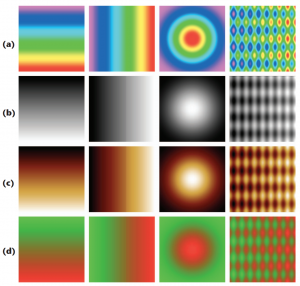
Many many years ago (long before the web was available to give me advice) I discovered a problem with rainbow colour maps that I haven’t seen mentioned elsewhere.  (There are many other problems.)

(a) rainbow, (b) gray-scale, (c) black-body radiation,
and (d) isoluminant green–red color maps
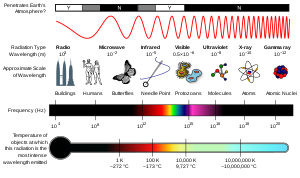
I was using a rainbow colour map to indicate “heat”, so, of course, I used red for the cool end, and blue for the hot end.  I was told by my then-manager that this was counter-intuitive.

Depends on the intuition, I suppose… 

note the direction of correlation between the temperature and the colour bar


For all my social networking posts, see my Google+ page

Tuesday, 3 June 2014

a long felt want

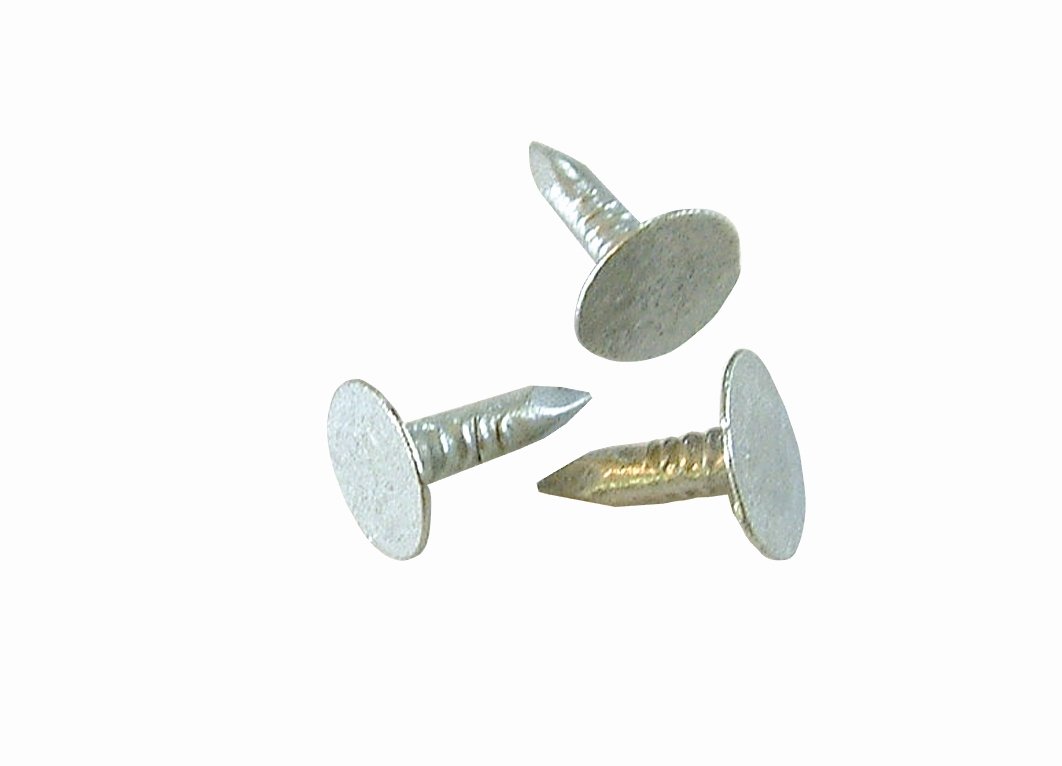
Copper nails are made of copper, steel nails are made of steel, so felt nails are …?

just bought, for fixing the garden shed roof


For all my social networking posts, see my Google+ page

Thursday, 6 February 2014

arms, legs, and...?

I’ve been looking up norovirus symptoms. (Yes, thank you, it is unpleasant.)  I found the statement:
Norovirus originates in the gastrointestinal system and often causes aching limbs, especially the arms and legs.
Interesting: how many other limbs are there?

this person is only acting ill


For all my social networking posts, see my Google+ page

Friday, 24 January 2014

watch out

my watch
Early December, the battery in my watch died.  For a variety of reasons, it’s taken me until today to be in the vicinity of a shop that sells replacements.  Initially it was deeply unsettling not to be wearing a watch (it was even more unsettling to wear one telling the wrong time, though).  My right wrist felt distinctly strange (I wear my watch on the right, since I’m left handed).  Even now, several weeks later, my wrist still felt strange without a watch.

So I was finally in town, and popped into H.Samuel for a new battery, around 11am.  I was gravely informed that it would be a “next day pickup”, because they had so many watches already “booked in” for new batteries.  Well, since it had taken me nearly 2 months to get into town in first place, I thought it highly unlikely I would be in town again tomorrow, so I declined.

I went into a nearby jewellers.  They looked at the watch, and apologised that they didn’t have the right tools to take the back off, otherwise they would have been happy to replace the battery there and then.  They suggested I tried Timpson’s.

I tried Timpson’s.  They took my watch, took out a standard jeweller’s watch screwdriver (we have a set of these at home), unscrewed the four screws holding the back on, popped out the old battery, popped in the new one, screwed the back on again, all in about 90 seconds flat.

a very specialised tool, apparently

This made me wonder how many watch batteries H.Samuel were changing.  To be on the conservative side, let’s assume that they are a little slower, and it takes them maybe three minutes to change a battery.  Let’s also assume that there is someone in the back of the shop steadily replacing the batteries in all those “booked in” watches (because clearly none of the staff on the shop floor were engaged in such a task).  Let’s assume they were working from 11am (when I went in) until 5pm, with a one hour break for lunch.  That’s 5 hours, at 20 batteries an hour, or a total of at least 100 watches booked in in front of mine.  Good grief. That’s a lot of dead batteries all at once.  (Or maybe, just maybe, not?)

Well, at least I now know where to go the next time my watch needs a new battery.

Monday, 6 May 2013

How far to the Crowne Plaza?

We've just reserved our hotel room for Eastercon 2014.  The con is being held in the Crowne Plaza Glasgow.  The online booking system helpfully gives an indication of how far the various con hotels are from the venue.


One property of a metric is that the distance from somewhere to itself, d(x,x) = 0, for any x. However, the booking system seems to be using a more science fictional metric, since it thinks that d(Crowne Plaza, Crowne Plaza) = 176 yards.

Possibly the hotel is beside itself with joy at hosting Eastercon?

Thursday, 28 March 2013

my work here is overshadowed

["The thing about quotes on the internet is you can not confirm their validity" -- Abraham Lincoln] I like to collect witty and apposite quotations. I also like to make sure that they are properly attributed.  There are many incorrect or apocryphal attributions around on the net of a million lies; anything unsourced should be treated with suspicion.  In my zeal to track things down, I have even been known to buy two different translations of a well known quotation in order to examine its meaning.

I've learned a lot hunting around for the correct attribution, such as the fact that Edmund Burke did not say
The only thing necessary for the triumph of evil is for good men to do nothing.
that Ralph Waldo Emerson did not say
Do not go where the path may lead, go instead where there is no path and leave a trail.
and that Voltaire did not say
 I disapprove of what you say, but I will defend to the death your right to say it.
Today I was hunting around for a source for the well known:
It is better to remain silent and be thought a fool than to speak and remove all doubt.
There appears to be an even split in opinion between Mark Twain and Lincoln, but they are all unsourced. Everything witty is eventually attributed to Twain, so these are always doubly suspicious, and if Lincoln had said it, surely there would be a source available somewhere?  More googling landed me at the Quote Investigator, a remarkably well-researched and well-referenced resource, putting my puny efforts to shame.  This will definitely be my first port of call from now on.

The correct attribution for the quotation?  Neither Twain not Lincoln, it seems.  It appears to have evolved over the years into its current form.

Monday, 18 March 2013

foggy thinking

driving in fog
Driving in fog this morning I was again bemused by something I notice every time when driving in fog.

Visibility was varying between 100-200 yards.  Nearly all the cars had their headlights on; about half also had their fog lights on.

A few had no lights on at all.  I assume these drivers are the ones who either think lights are for wimps, or who don't think at all.

But what bemuses me, every time, is the ones who have only their side-lights on.  In fog, you can see a car before you see its sidelights.  These drivers must have got as far as thinking "fog; put lights on" but not got as far as thinking "put headlights on because sidelights are invisible in fog, as I can clearly tell from all those other cars with only their sidelights on..."

I excuse those with sidelights comprising a little row of LEDs; I suspect these are visible from low earth orbit.

It's not just me.  Highway Code rule 226 says:
You MUST use headlights when visibility is seriously reduced, generally when you cannot see for more than 100 metres (328 feet). You may also use front or rear fog lights but you MUST switch them off when visibility improves 
(Although I MUST say, translating the round number 100m to 328ft is ridiculously precise.)