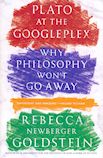
Jo Walton.
The Just City.
Corsair. 2014
Having just finished
Plato at the Googleplex,
this seemed like the obvious next read.
The gods Athene and Apollo decide to set up and run a ‘Just City’,
following the rules Plato laid down in his Republic.
They find a suitably isolated island, and recruit a bunch of people from throughout history:
ones who have prayed to Athene to live there.
These people become the first rulers, and they buy cohorts of 10-year-old-slaves
(with some rather unfortunate repercussions on the local slave economy)
to become the first people actually fully raised according to Plato’s plan.
They all settle down to being the best selves they can be, for the most part.
Things are going along reasonably well, although the planned parenthoods,
and enslaved machines becoming sentient, are causing some wobbles.
Then they decide to introduce Sokrates to the mix...
This is a gentle novel with deep consequences.
It has three point-of-view characters – a god, a ruler, and a child –
as we see the Just City grow from its inception until the children reach adulthood.
I’m glad I had read
Plato at the Googleplex just before this,
as I am not as familiar with Plato’s philosophy as I could be.
My only previous information was from reading
Popper’s The Open Society and Its Enemies
many years ago,
and getting a rather less positive view of his philosophy.
Jo Walton’s novel of living in Plato’s Republic
steers a course between these two views.
There are certainly all the nasty totalitarian issues Popper rails against,
from the Noble Lie downwards,
but there are other problems in utopia.
In particular, the use of robots instead of slaves to do all
the scut-work initially seems to be a clever technological solution to a very real problem,
but it turns out to have problems of its own.
Most of the issues are experienced only second-hand through the viewpoint
characters, who have been raised or trained within the philosophy,
and are so less critical than we are.
The initial nerd-wish-fulfillment educational aspects, even when confronted with Sokratic stirring,
eventually have to give way to the underlying problems, however.
I thoroughly enjoyed this, and am looking forward to the sequel: The Philosopher Kings.
Be excellent!
For all my book reviews, see
my main website.
Showing posts with label Greece. Show all posts
Sunday, 25 October 2015
Saturday, 17 October 2015
book review: Plato at the Googleplex
Labels:
books,
Greece,
philosophy,
review
Rebecca Newberger Goldstein.
Plato at the Googleplex: why philosophy won’t go away.
Vintage. 2014
Why do research in philosophy? Wasn’t everything that needed to be said, already said by Plato? Hasn’t the time since then been spent by science filling in the gaps, and firming up the arguments?
This is the critique of philosophy that Goldstein is arguing against in this readable book. She brings Plato back to life and introduces him to the modern day: discussing the need for Philosopher-Kings and whether they could be replaced by computer AI, debating how to raise excellent children, giving relationship advice as an agony aunt in a magazine, being interviewed on cable news about science and philosophy, and finally, in conversation with a neuroscientist about mind v brain while waiting for a brain scan. Interspersed with these lively dialogues (an ancient idea, borrowed from Plato himself), Goldstein writes more traditionally-styled chapters, discussing the historical Plato and Socrates, and the cultural context in which their ideas were developed.
This is a fascinating read. I actually found the traditional chapters more informative, as the others are played for culture-clash laughs as much as for exploring the philosophical issues. What I found most interesting was the discussions of that cultural context: the explanation of precisely why those Greeks, insecurely looking back at their own Golden Age, found Socrates to be such an annoying little gadfly, and were so worried about the way he was corrupting their youth, that they were willing to democratically vote to put him to death.
The writing is lovely throughout, and I learned a lot, about Plato, Socrates and ancient Greece, about philosophy, and about the reason for doing philosophy (that is, for arguing a subject into the ground). There is a lovely passage near the end explaing why it is so important that we argue out all points, and that no ideas should get a free pass:
I take it that the argument is that we still need new philosophy (so still need philosophy researchers), not just that we need to apply existing philosophical principles and approaches (that we only need philosophy teachers). So I don’t think this book achieves what it sets out to do: to demonstrate that philosophy research is relevant today (although I agree that it is). However, that doesn’t matter; what the book does deliver is very good: Plato in his historical context, and Plato coping with the modern world, at the Googleplex, and beyond.
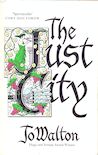
Plato at the Googleplex: why philosophy won’t go away.
Vintage. 2014
Why do research in philosophy? Wasn’t everything that needed to be said, already said by Plato? Hasn’t the time since then been spent by science filling in the gaps, and firming up the arguments?
This is the critique of philosophy that Goldstein is arguing against in this readable book. She brings Plato back to life and introduces him to the modern day: discussing the need for Philosopher-Kings and whether they could be replaced by computer AI, debating how to raise excellent children, giving relationship advice as an agony aunt in a magazine, being interviewed on cable news about science and philosophy, and finally, in conversation with a neuroscientist about mind v brain while waiting for a brain scan. Interspersed with these lively dialogues (an ancient idea, borrowed from Plato himself), Goldstein writes more traditionally-styled chapters, discussing the historical Plato and Socrates, and the cultural context in which their ideas were developed.
This is a fascinating read. I actually found the traditional chapters more informative, as the others are played for culture-clash laughs as much as for exploring the philosophical issues. What I found most interesting was the discussions of that cultural context: the explanation of precisely why those Greeks, insecurely looking back at their own Golden Age, found Socrates to be such an annoying little gadfly, and were so worried about the way he was corrupting their youth, that they were willing to democratically vote to put him to death.
The writing is lovely throughout, and I learned a lot, about Plato, Socrates and ancient Greece, about philosophy, and about the reason for doing philosophy (that is, for arguing a subject into the ground). There is a lovely passage near the end explaing why it is so important that we argue out all points, and that no ideas should get a free pass:
p377. There are strong—oh, so strong—reasons to affirm that yes, we ought to exclude privileged points of view as we seek to know the world. No claim to knowledge should be allowed a free pass, getting by without giving an account of itself, a justification, that can appeal to all who sign on to the project of reason, no matter the special features of their subjective points of view. It is not just a matter of the objectivity of reality that motivates the demand for objectivity of knowledge. Far more persuasive reasons arise from the obvious hazards of subjectivity, which is a breeding ground for prejudice, superstition, and egotistical self-aggrandizement. We are too prone to favoring our own particularity and, if we are talented enough, can raise up a cunningly convincing ideology that will shape all the world to fit our particular dimensions. It is a dangerous mistake to allow subjectivity to strut its stuff with such smug thuggishness. Exposing our most cherished beliefs to the rough treatment of multiple points of view—each of which is prone to see the world from the vantage of its own advantage—is our only hope for defeating the hazards of self-serving subjectivity—complacent at best, murderously certain at worst. And so philosophy … has typically been saying yes to the exclusion of privileged points of view ever since Plato himself set up perhaps the most powerful image in the history of thought, the Myth of the Cave…Yet despite all this, I felt there was something lacking. In the very first paragraph of the Prologue, Goldstein says:
p3. A book devoted to a particular thinker often presumes that thinker got everything right. I don’t think this is true of Plato. Plato got about as much wrong as we would expect from a philosopher who lived 2,400 years ago. Were this not the case, then philosophy, advancing our knowledge not at all, would be useless. I don’t think it’s useless, so I’m quite happy to acknowledge how mistaken or confused Plato can often strike us.And yet, the majority of the book seems to be about what Plato did get right. The points Plato concedes in the dialogues seem minor compared to the overall point; the majority of the standard chapters are about Plato’s philosophical achievements, and relatively small improvements since.
I take it that the argument is that we still need new philosophy (so still need philosophy researchers), not just that we need to apply existing philosophical principles and approaches (that we only need philosophy teachers). So I don’t think this book achieves what it sets out to do: to demonstrate that philosophy research is relevant today (although I agree that it is). However, that doesn’t matter; what the book does deliver is very good: Plato in his historical context, and Plato coping with the modern world, at the Googleplex, and beyond.
Sunday, 19 February 2012
Thessalonika tales
Labels:
food,
Greece,
politics,
Thessalonika,
weather
I had a fine time in Thessalonika, and managed to avoid any olives. Interesting people, good conversation, great food; what more could you ask for?
It was sunny, but cold, with a bracing north wind blowing down from the still-snow-capped mountains. Although the sun shone brightly, there was a low level haze, obscuring the views. However, around lunchtime on the Thursday it was a bit clearer, and my hosts pointed out a mountain visible across the bay: Mount Olympus.
The food was excellent in quality, very varied, and too much in quantity. My hosts wanted to ensure that I experienced a whole range of styles and flavours; this would work best in a tapas-like style setting, but is a little overwhelming when each extra example dish ordered is what I consider to be a full meal in itself. I sampled widely, but could not eat it all, no matter how much I wanted to! And I skipped the breakfasts.
Given all the recent news about troubles in Greece (which some were claiming has been manufactured by the government, in order to frighten the people into accepting the economic cuts), my main impression of Thessalonika is of a calm, peaceful, friendly, and welcoming city. There were large groups of people thronging the streets for the "Burnt Thursday" (Tsiknopempti) festival (with lots of barbecues before Lent), and everyone was good natured and enjoying themselves, with no sign of trouble or anger, and none of the drunken rowdiness one would find in England. I'd love to go back there, with more time to explore, both the city, and the surrounding mountains.
It was sunny, but cold, with a bracing north wind blowing down from the still-snow-capped mountains. Although the sun shone brightly, there was a low level haze, obscuring the views. However, around lunchtime on the Thursday it was a bit clearer, and my hosts pointed out a mountain visible across the bay: Mount Olympus.
The food was excellent in quality, very varied, and too much in quantity. My hosts wanted to ensure that I experienced a whole range of styles and flavours; this would work best in a tapas-like style setting, but is a little overwhelming when each extra example dish ordered is what I consider to be a full meal in itself. I sampled widely, but could not eat it all, no matter how much I wanted to! And I skipped the breakfasts.
Given all the recent news about troubles in Greece (which some were claiming has been manufactured by the government, in order to frighten the people into accepting the economic cuts), my main impression of Thessalonika is of a calm, peaceful, friendly, and welcoming city. There were large groups of people thronging the streets for the "Burnt Thursday" (Tsiknopempti) festival (with lots of barbecues before Lent), and everyone was good natured and enjoying themselves, with no sign of trouble or anger, and none of the drunken rowdiness one would find in England. I'd love to go back there, with more time to explore, both the city, and the surrounding mountains.
Tuesday, 14 February 2012
no olives please, I'm British
I'm getting ready to fly out to Thessalonika tomorrow, to examine a PhD thesis, and give a seminar. My very gracious hosts, on learning that this would be my first ever trip to Greece, have also laid on a little sight-seeing for me, so that I can soak up some culture.I'm looking forward to the food, too ... except ... I haven't confessed to them yet that I don't like olives...
Subscribe to:
Posts (Atom)