Showing posts with label publishing. Show all posts

Wednesday, 3 June 2026

If you ever wanted to know how potentially lucrative it would be to be an unethical journal editor, read on

I've blogged before about offers journal editors get to be unethical.

The offers continue:

Dear [editor in chief],

I hope you are doing well. My name is Ivy Yang, and I work as a publishing development editor focusing on academic journal collaborations and manuscript resources.

I am reaching out to explore the possibility of private cooperation with you regarding submissions to your journal. We have a stable number of manuscripts in related research areas and are looking for an experienced editor who can help oversee the handling process in an efficient and professional manner.

Our expectation is that submitted papers can receive timely attention, be assigned to suitable reviewers, and move through peer review smoothly. Where appropriate and in line with journal policy, we may also recommend qualified reviewer candidates for your consideration, which could help save time in the reviewer selection process.

For successfully accepted manuscripts, we would also be happy to offer a cooperation fee or honorarium. The specific arrangement can be discussed privately based on mutual understanding.

We highly value long-term cooperation based on mutual trust, efficiency, and professional communication. If this possibility is of interest to you, I would be glad to discuss details with you privately at your convenience.

Looking forward to hearing from you.

Best regards,

Ivy Yang

I've bolded the most dubious part: a “cooperation fee” “discussed privately”.  Okaaaaay, that sounds legit.

<\s>

Well, Ivy is nothing if not persistent.  And the next email was much more explicit.  Actual dollar amounts.

Our work focuses on helping authors identify suitable journals and supporting them throughout the submission and peer-review process. This is a paid collaboration, and the compensation is provided on a per-paper basis, depending on the journal category:

EI-indexed journals: USD 200–1000 per paper;

SCI-indexed journals: USD 500–2200 per paper;

SSCI-indexed journals: USD 1000–3000 per paper.

The exact amount depends on the journal level, workload, and degree of involvement.

If you are interested in this opportunity, I would be happy to discuss further details with you. We can continue via email or any platform convenient for you.

Ivy Yang

Up to 3000 USD under-the-table remuneration per paper!  Pay-to-publish takes on a whole different meaning.  No wonder there are so many junk journals.  (Although, like any such scam, I would bet the numbers change once an "agreement" is in place.)

Remember, gentle reader, just because a paper is “in the literature” and has been “peer reviewed” doesn't mean it is of any value whatsoever (scientifically that is; clearly there is a monetary value!)  Junk journals, paper mills, AI slop.  The literature is not merely being polluted, it is being swamped with drek.  Is this how progress ends?  Sinking into the shoulders of Swamp Thing?


Saturday, 23 May 2026

It was 30 years ago today...

 … that my first fully dated item appeared on my website: a review of Clannad’s 1996 tour at the Cambridge Corn Exchange, attended a week earlier.

I blogged about this piece of history 10 years ago.  What's changed since then?

Back in 2016 I was working at the University of York.  I have since retired, although I still have Emerita status there.

To date, on my website I have 623 non-fiction book reviews, 1094 science fiction reviews, and 82 other fiction reviews.  That's about 5 reviews a month averaged over the 30 years, although it had been decreasing, and was particularly low in 2016.  Over the last 10 years, that's a further 189 non-fiction, 250 science fiction, and 7 other fiction reviews, so a reading rate of about 3-4 book per month over that time period.  I hadn't decreased my reading, just my reading of books, as reading research papers took up a lot of my time at York.  There's a visible spike in number of book reviews last year as retirement kicked in, back to the previous rate of 5-6 a month.

There haven't been any major changes in the design of the website, just more material, mostly in terms of reviews, research publications, and solar power statistics.  So, maybe just more of the same in 2036, too?  Let's see!


Saturday, 1 November 2025

still retired

A year ago today was the first day of my retirement.  As I mentioned at the time, I have several academic retirement projects on the go.  So how has the first year gone?

Pretty well, actually. I have been to three conferences: CapoCaccia in May, UCNC in August, and ALife in October.  I have had multiple papers published, some of which I did a large chunk of the work for. I have started learning about Topological Data Analysis, and am applying it to some real biological data sets; I've really enjoyed writing all the code for this.  Our new LoCoMo ARIA project is fascinating, with our two post-docs making great strides, and I am pulling ideas from both simulation and open-ended evolution into it.  My penultimate PhD student has passed his viva.  Added to this, I have a handful of other papers and projects also making progress.  

And I think I have figured out how to level up the open-ended evolution experiments I have been thinking about, thanks to a chance conversation at ALife that put me on the beginning of the track to a relevant 2003 paper (many thanks to whoever that was; I spoke to so many people there I'm afraid I have forgotten who pointed me in this direction originally).  But it's still just pages of scribbled notes and fever dreams for now; watch this space!

On the non-academic side, I am managing to do more reading, too.

So, all in all, a productive, enjoyable, and actually amazingly relaxing, first year.  Not having a fortnightly 175-mile commute is a wonderful lifestyle change.  It did take me about 6-9 months to stop going: "wait, what is it I'm forgetting to do?"  Particularly when doing some of that fiction reading.  But I'm now past that, and looking forward to year two of fun research.


Friday, 3 October 2025

Towards Origins of Virtual Artificial Life

I have a new paper, "Towards Origins of Virtual Artificial Life: an overview".  This is in a special issue of PhilTransRoySocB, on Origins of Life.  I am also one of the three editors of that SI (but this paper was still properly peer reviewed, handled by one of the other editors, I hasten to add!)  

abstract:

The field of artificial life (ALife) studies ‘life as it could be’, in contrast to biology’s study of ‘life as we know it to be’. This includes a wide range of potential physical substrates, from synthetic biology (new genes), through xenobiology (new amino acids and DNA bases), inorganic chemistry (different structural elements), soft and hard robotics (new kinds of bodies) and also virtual life (existing inside a computer). Since any such life forms are artificial, the originating mechanisms can be similarly artificial, or can attempt to emulate natural mechanisms. Given the wide range of possible substrates and origins, it is crucial to have good definitions, and well-defined ways to detect and measure life, if and when it originates. This overview examines the current state of the art in ALife in defining, detecting and originating its subject matter, with its main focus on virtual life. After discussing common properties of several definitions of life, the overview synthesizes an engineering-focussed definition, in terms of abstract requirements, generic designs and specific implementation mechanisms, and then reviews the current state of the art through this lens. Although virtual ALife that satisfies all these requirements is yet to be exhibited, significant progress has been made on engineering individual mechanisms and, arguably, partially alive systems.

I had fun writing it, thinking about ALife in the context of origins of life.  Given it is artificial life, that implies an artificer, so it has to be an engineering origin rather than a natural origin.  So I get to exercise my Requirements Engineering knowledge.

It's open access, and can be found at doi:10.1098/rstb.2024.0298


Sunday, 23 March 2025

Engineering Persuadable Matter

My latest publication, commenting on a paper about agential chemistry, from my own computational perspective.  This topic falls in the intersection of Artificial Life and Unconventional Computing, forming a research area I am intensely interested in.

Susan Stepney. Engineering Persuadable Matter: A Comment on Armstrong’s ‘Life, Mind and Matter’. Social Epistemology Review and Reply Collective, 14(3):33-42, 2025.

Rachel Armstrong (2024) advocates for a new approach to ‘agential chemistry’, a form of ‘new materialism’ that allows matter to take an active role. Here I comment on some of these ideas through a computational lens: the consequences if agential chemistry can perform computation to advance its own agenda; how it might provide the structure and dynamics needed for computation, and the metadynamics for open ended systems; and how it opens the possibility of a new technological discipline of engineering ‘persuadable’ agential matter.


While searching for an image to use to spice up this post, I came across an interesting Medium piece that forms a nice overview of some of the issues, from a neural AI perspective.  And has the pretty image I use above (click to embiggen). 


Saturday, 15 March 2025

Reservoir computing benchmarks: a tutorial review and critique

Our latest paper, reviewing a bunch of standard benchmarks for Reservoir Computing, digging into their histories, and why some of them might not be the best approach to be using.

Chester Wringe, Martin Trefzer, Susan Stepney. Reservoir computing benchmarks: a tutorial review and critique. International Journal of Parallel, Emergent and Distributed Systems, 1-39, 2025. doi:10.1080/17445760.2025.2472211

Reservoir Computing is an Unconventional Computation model to perform computation on various different substrates, such as recurrent neural networks or physical materials. The method takes a ‘black-box’ approach, training only the outputs of the system it is built on. As such, evaluating the computational capacity of these systems can be challenging. We review and critique the evaluation methods used in the field of reservoir computing. We introduce a categorisation of benchmark tasks. We review multiple examples of benchmarks from the literature as applied to reservoir computing, and note their strengths and shortcomings. We suggest ways in which benchmarks and their uses may be improved to the benefit of the reservoir computing community.

If you don't subscribe to that journal, you can find the same text (if not as prettily typeset) on the arXiv, at   arXiv:2405.06561 [cs.ET]


Monday, 6 January 2025

Raman SOM

Daniel West, Susan Stepney, Y. Hancock.  Unsupervised self-organising map classification of Raman spectra from prostate cell lines uncovers substratified prostate cancer disease states.  Scientific Reports, 15:773, 2025. doi:10.1038/s41598-024-83708-6

This started out as a feasibility study, to see if Kohonen Self-Organising Maps (SOMs) could be used to cluster minimally preprocessed Raman spectroscopy data taken from individual cells.  SOM an unsupervised learning approach, and can cluster high dimensional data (here, over 1000D) down into a 2D visual representation.  We had Raman spectra of prostate cells, some cancerous, some not.  Could a SOM distinguish these two classes?

We blinded the data, so that the system did not know which spectrum was in which class, to ensure this was truly an unsupervised exercise.  After some fiddling about to understand what values several parameters should be, we fed the data in, and looked at the resulting map.  We could see three clusters.

Had it worked?  We unblinded the data, and yes, one of the clusters was the non-cancerous cells, and the other two clusters were cancerous cells.  Why two clusters?  Well, it turns out the mapping process had managed to discover two distinct classes of cancerous cells.  Further research is underway to investigate these differences.

So yes, it works, and better than we had hoped!


Saturday, 16 November 2024

Physical reservoir computing: a tutorial

Susan Stepney. Physical reservoir computing: a tutorial.
Natural Computing, 2024. doi: 10.1007/s11047-024-09997-y

A decade ago (I was going to write "a few years ago", then looked at the date!) my colleagues and I wrote a paper entitled "When does a physical system compute?", which gives a framework to distinguish systems that are computing, from ones that are just doing their thing.

Recently, I was invited to write a tutorial for Natural Computing on Physical Reservoir Computing.  That's about using weird physical materials, like a glob of carbon nanotubes, or a sheet of magnetic material, or whatever, to compute directly, according to the "reservoir computing" model, which is a form of neural network.

I decided to use the framework we previously developed to structure the tutorial.  This framework provides five things you need to consider: (1) the abstract computational model, here, reservoir computing; (2) the physical computing substrate, here, the purported reservoir computer; (3) how to encode abstract inputs and physically inject them into the computer; (4) how to observe physical outputs and decode them to abstract results; (5) and last but certainly not least, how to validate that the physical system is faithfully implementing the abstract model.

If you want to see more of the details, have a look at the paper: it's open access.


Thursday, 13 June 2024

publishing smoothly with Alice

A colleague, who is Editor-In-Chief of a journal, forwarded me an email he recently received.  Wow!

Although written with a degree of plausible deniability ("we just want you to help with the review process", as if organising the review process isn't basically what editors do anyway), it's actually pretty blatant.

Dear [[COLLEAGUE'S NAME]]


We are an academic research institution in China. Our authors and clients come from universities all over the world, so we have many high quality articles in related fields such as computer science, engineering, materials science, physic, management science. We know your reputation in academia, so we look forward to working with you. We know the rules of cooperation, so we can ensure the confidentiality of cooperation and achieve mutual benefit.We are also keen to help editors cite their journal literature and help journals better improve their impact factors and ratings.


After 10 years of development,we have accumulated more than 60 000 customers (doctors and college teachers), including but not limited to computer, materials science, physic, chemistry, communication, medicine, electronics, automation, management science, mathematical application, ecological environment, electromechanical and other majors. Most authors expect their articles to be acceptrd and published in SCI/EI/SSCI journals as soon as possible.We have successfully published hundreds of articles in journals such as Elesvier, Springer, IEEE, IET etc.


We know that you are responsible for many special issues of Springer,IET, SAGE,Welly and Elsevier publisher. And we hope to establish long-term, stable and friendly cooperation with you.You can get a more comprehensive understanding of us through our official website:


[[[REDACTED URL]]]


Our cooperation is to help more authors publish their articles more professionally and smoothly. The process is roughly like this:1、We will select articles suitable for your journal (ensure the quality and scope of the article) and send them to you for confirmation of submission.


2、After the submission, please help our article to be accepted smoothly. (please help with initial check,review process and so on)


3、After the article is accepted, we will give you a fee. If you agree to cooperate, I will discuss the fee with you again.


If you think we can cooperate also, you can add my WhatsApp or WeChat at any time.


Waiting for your reply. I think we're going to be great partners.


My WhatsApp: [[[REDACTED]]]


Sincerely


Alice


Thanks, but no thanks, "Alice".


Friday, 25 March 2022

very effective and knowledgable

 I get email (not redacted, so as not to protect the guilty)

Computer Reviews Journal

E-ISSN: 2581-6640


Dear Susan Stepney,


We are pleased to tell you that we have gone through your research article entitled “Editorial: News from the New Co-Editors in Chief” which was very effective and knowledgeable in the views of the Journal of imaging and intervention radiology. Based on the impact generated by your recent scientific communications we are glad to invite you to submit the manuscript for our Journal.


We are glad to invite you to submit Research articles/Review articles/Case Reports/Special Issue articles for our prestigious Journal.


You can submit your paper online (or) send it as an e-mail attachment.


We would appreciate receiving your submission on or before 9th April 2022 (or) please let us know your feasibility of submitting an article.


Anticipating a positive response.


Best regards


Amara Stewart

Assistant Managing Editor

Computer Reviews Journal

WhatsApp: +3225889658

I never realised my editorials counted as research articles.  I need to update my CV with this “very effective and knowledgable” article, I suppose.

And in the area of “imaging and intervention radiology”, eh?  That doesn't seem to mesh with the journal name in the email header (or the content of the editorial itself, somewhat less surprisingly).  So, navigating to the “prestigious” Computer Reviews journal website, I see that

The mission of the Computer Reviews Journal is to share, develop, and facilitate the output of research paper about fundamental and applied for Computer Reviews Journal.

So that clears that up, then. 


Saturday, 9 October 2021

Beyond the Babbage engine

Here's our latest paper, our perspective on mechanical computing.  It's not all gears and wheels and steampunk: there are lots of interesting new materials that can be used to build these devices in the small.

Hiromi Yasuda, Philip R. Buskohl, Andrew Gillman, Todd D. Murphey, Susan Stepney, Richard A. Vaia, Jordan R. Raney.  Mechanical computing.  Nature, 598:39–48, 2021. 

Abstract: Mechanical mechanisms have been used to process information for millennia, with famous examples ranging from the Antikythera mechanism of the Ancient Greeks to the analytical machines of Charles Babbage. More recently, electronic forms of computation and information processing have overtaken these mechanical forms, owing to better potential for miniaturization and integration. However, several unconventional computing approaches have recently been introduced, which blend ideas of information processing, materials science and robotics. This has raised the possibility of new mechanical computing systems that augment traditional electronic computing by interacting with and adapting to their environment. Here we discuss the use of mechanical mechanisms, and associated nonlinearities, as a means of processing information, with a view towards a framework in which adaptable materials and structures act as a distributed information processing network, even enabling information processing to be viewed as a material property, alongside traditional material properties such as strength and stiffness. We focus on approaches to abstract digital logic in mechanical systems, discuss how these systems differ from traditional electronic computing, and highlight the challenges and opportunities that they present.


Wednesday, 18 August 2021

overview of physical reservoir computing

There's a new book on Reservoir Computng out from Springer, and it has lots of interesting chapters, including one from us:

Matthew Dale, Julian F. Miller, Susan Stepney, Martin Trefzer.
Reservoir Computing in Material Substrates.
in Kohei Nakajima, Ingo Fischer, eds, Reservoir Computing: Theory, Physical Implementations and Applications, pp.141–166. Springer, 2021.
doi:10.1007/978-981-13-1687-6_7

Abstract: We overview Reservoir Computing (RC) with physical systems from an Unconventional Computing (UC) perspective. We discuss challenges present in both fields, including encoding and representation, or how to manipulate and read information; ways to search large and complex configuration spaces of physical systems; and what makes a “good” computing substrate.

Reservoir Computingis an interesting area of unconventional computing, because it supports computing directly with a wide variety of different physical materials, so it is finding many novel applications.


Wednesday, 4 August 2021

complexity and parasites

 Our new paper published today, open access:

Simon Hickinbotham, Susan Stepney, Paulien Hogeweg.
Nothing in evolution makes sense except in the light of parasitism: evolution of complex replication strategies.
Royal Society Open Science, 8(8):210441, 2021.

Abstract: Parasitism emerges readily in models and laboratory experiments of RNA world and would lead to extinction unless prevented by compartmentalization or spatial patterning. Modelling replication as an active computational process opens up many degrees of freedom that are exploited to meet environmental challenges, and to modify the evolutionary process itself. Here, we use automata chemistry models and spatial RNA-world models to study the emergence of parasitism and the complexity that evolves in response. The system is initialized with a hand-designed replicator that copies other replicators with a small chance of point mutation. Almost immediately, short parasites arise; these are copied more quickly, and so have an evolutionary advantage. The replicators also become shorter, and so are replicated faster; they evolve a mechanism to slow down replication, which reduces the difference of replication rate of replicators and parasites. They also evolve explicit mechanisms to discriminate copies of self from parasites; these mechanisms become increasingly complex. New parasite species continually arise from mutated replicators, rather than from evolving parasite lineages. Evolution itself evolves, e.g. by effectively increasing point mutation rates, and by generating novel emergent mutational operators. Thus, parasitism drives the evolution of complex replicators and complex ecosystems.

Parasites drive complexity.  But how?  Here, we examine the outcomes of some computer experiments using our Stringmol automata chemistry (where ‘molecules’ are short assembly language programs, that bind and execute to copy each other), where we can see parasites evolve, then see the measures that evolve that replicators use to guard against parasites, then the counter-measures that parasites use to get round these, then the counter-counter-measures, and so on.


evolution of complex execution strategies (see paper for details)

Interestingly, we don’t see separate lineages of replicators and parasites co-evolving, but rather each new strain of parasite evolves from a replicator, so that it can exploit that replicator’s defence code itself.

The original bioRxiv version of the paper got a mention in preLights.


Wednesday, 30 December 2020

Penrose Life

Recently I was email interviewed by Siobhan Roberts for an article she was writing about Conway’s famous Game of Life.  The article has just been published in the New York Times, and I see I am in good company!

Not only that, but the piece was picked up by Clive Thompson who wrote a post for BoingBoing on the part of the article I was interviewed about: runing the Game of Life on a Penrose tiling.

Here are a couple of the many oscillators my students and I discovered (and named):


period 4 bat


period 9 moustache

You can find out more about the work my students and I have done on this here:


Sunday, 20 September 2020

bacteria computing in cubes

Our new paper published today:

Susan Stepney, Viv Kendon.
The representational entity in physical computing
Natural Computing, (online), 2020

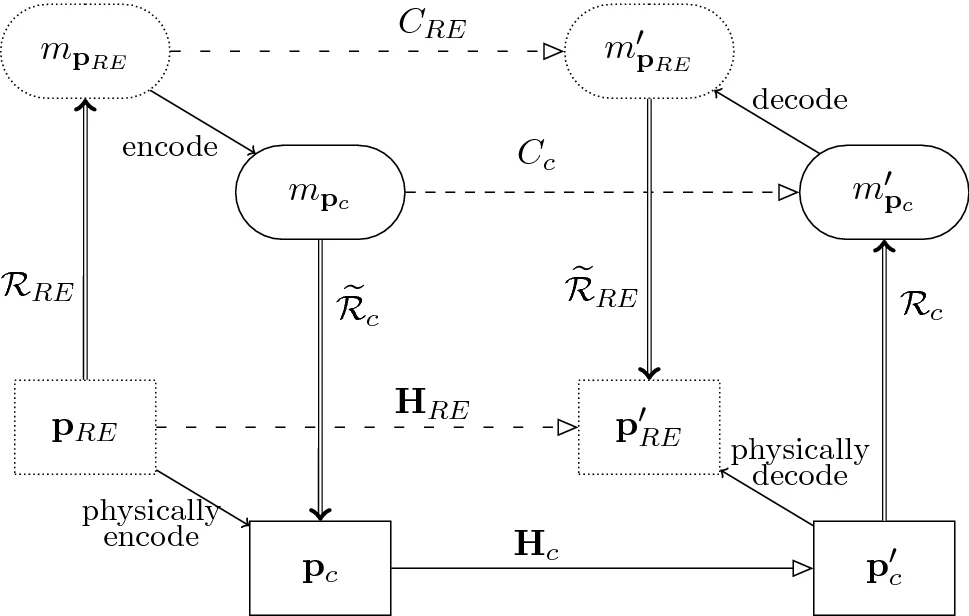
Abstract: We have developed abstraction/representation (AR) theory to answer the question “When does a physical system compute?” AR theory requires the existence of a representational entity (RE), but the vanilla theory does not explicitly include the RE in its definition of physical computing. Here we extend the theory by showing how the RE forms a linked complementary model to the physical computing model. We show that the RE does not need to be a human brain, by demonstrating its use in the case of intrinsic computing in a non-human RE: a bacterium..
Many systems are claimed to compute, from spaghetti, to slime moulds, to the universe itself.  But how can we tell if a system is computing, or just “doing its thing”?

We have been working on the snappily named “abstraction/representation theory” for a while to clarify this issue.  In a nutshell, one part of the requirement for a system to be computing is that what it is doing has to represent something else in the world.  And that representation is in the eye of the (also snappily named) repesentational entity (RE) that is using the computer.

Up until now, our definitions have only referred to the RE, but not included it in the overall model.  No longer.  Here, we add the RE to the model, which adds a new dimension, and the definitoin moves from requiring a commuting square to a commuting cube.  (See the paper for lots more pictures of these cubes...)


Sunday, 23 August 2020

Artificial glassware for artificial chemistries

 Our new paper published recently:

Penelope Faulkner Rainford, Angelika Sebald, Susan Stepney.
MetaChem: An algebraic framework for Artificial Chemistries
Artificial Life Journal, 26(2):153–195, 2020

Abstract: We introduce MetaChem, a language for representing and implementing artificial chemistries. We motivate the need for modularization and standardization in representation of artificial chemistries. We describe a mathematical formalism for Static Graph MetaChem, a static-graph-based system. MetaChem supports different levels of description, and has a formal description; we illustrate these using StringCatChem, a toy artificial chemistry. We describe two existing artificial chemistries—Jordan Algebra AChem and Swarm Chemistry—in MetaChem, and demonstrate how they can be combined in several different configurations by using a MetaChem environmental link. MetaChem provides a route to standardization, reuse, and composition of artificial chemistries and their tools.

Artificial chemistries – computational systems that link together abstract ‘molecules’, inspired by the way natural chemistry operates – are fascinating ways to explore the growth of complexity, and underpin some aspects of Artificial Life research.  Most AChem research focusses on designing the molecules and reactions of the artificial system.

We have been working at the level of the artificial ‘glassware’: the system whereby different molecules are brought together under different conditions.

Our new paper explains how this MetaChem system works, and how it can be used to underpin essentially any artificial chemistry – it can even use whole chemistries at one level to be the molecules at another level.

The python code is available on GitHub for anyone to use in their own AChem systems.

Monday, 6 April 2020

correcting proofs

I’ve spent a couple of hours correcting proofs of a paper.

There were several … interesting … changes made by the typesetter.

But the one the really had me yelling at the screen was in some mathematical text.  We had introduced an operator called redacted (well, it wasn’t actually called that, but I’m protecting the guilty here).  We consistently used a sans serif font, to distinguish it from other terms.

In some places it had been changed to redacted.  In some places it remained as redacted.  And in other places it had been changed to redacted.

Aaaargh!!!


Sunday, 27 October 2019

sequestering carbon, several books at a time C

My one-hundredth sequestration post!

The latest batch:


The Kagan book is not upside down; the title is printed on the spine in the opposite orientation to conventional, possibly because it is from a German printer?  Is the convention the opposite in Germany?


Wednesday, 19 June 2019

can this blob of goo compute?

Our new paper published today:
Matthew Dale, Julian F. Miller, Susan Stepney, Martin A. Trefzer.
A substrate-independent framework to characterize reservoir computers.
Proceedings of the Royal Society A, 475(2226), 2019

Somewhat amazingly, various blobs of “goo” can be made to compute simple tasks.  But, given a new blob of goo, can we tell how well it will compute, without having to train it on specific tasks?

That’s what we set out to address in our new paper.  We describe a framework for evaluating the “quality” of a proposed computing substrate, in comparison to a “reference” reservoir computer (an unconventional model of computing that fits well with gooey substrates).

We then use of the framework to evaluate a (physical) carbon nanotube system (it computes, as we knew, but not very much, as we also knew, but now we know exactly how much).  We also use it to evaluate a (simulated) optical delay line, and show that it can be used for many reservoir tasks, but not necessarily all.

We are now going on to generalise this framework to a wider set of computational models and physical substrates, as part of out EPSRC-funded SpInspired project.  Watch this space!