The latest batch:
Showing posts with label Pluto. Show all posts
Thursday, 23 May 2024
Saturday, 22 June 2019
Saturday, 18 February 2017
the furthest planet from the sun is Neptune, no Pluto, no Neptune, no Pluto, no Neptune!
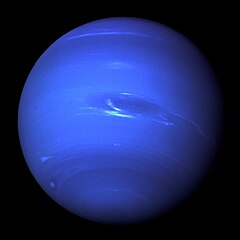
On 23 September 1846, Neptune was discovered, and became the furthest known planet from the sun.
On 18 February 1930, 87 years ago today, Pluto was discovered, and became the furthest known planet from the sun.
On 7 February 1979, Pluto crossed inside Neptune’s orbit, and Neptune became the furthest known planet from the sun, for the second time.
(Extrasolar planets started being discovered in 1992, but we won’t count them here.)
On 11 February 1999, Pluto crossed back outside Neptune’s orbit, and became the furthest known planet from the sun, for the second time.
On 24 August 2006, Pluto was downgraded to a “dwarf planet”, and Neptune became the furthest known planet from the sun, for the third time.
| bad luck, Pluto |
On 7 February 1979, Pluto crossed inside Neptune’s orbit, and Neptune became the furthest known planet from the sun, for the second time.
(Extrasolar planets started being discovered in 1992, but we won’t count them here.)
On 11 February 1999, Pluto crossed back outside Neptune’s orbit, and became the furthest known planet from the sun, for the second time.
| third time lucky! |
On 24 August 2006, Pluto was downgraded to a “dwarf planet”, and Neptune became the furthest known planet from the sun, for the third time.
Thursday, 24 March 2016
to Pluto, and beyond
Before going to the science fiction Eastercon in Manchester, we are staying with some friends. The weather forecast for Thursday was essentially “heavy rain all day” (both the Met Office web site and BBC weather app were in agreement on this), but as we looked out of the window, we saw no rain. So if we wanted to go anywhere, we needed something that would allow us to dodge possible showers. Our friends naturally have local knowledge, so suggested Jodrell Bank: it has a visitor centre (sorry, Discovery Centre), and some nice gardens. We piled into the car.
When we arrived, it still wasn’t raining, so we walked round the radio telescope itself.
There were some outdoor exhibits, including a pair of large parabolic dishes a 100 metres or so apart. Speak into one, and you can be heard at the other, as clearly as if you are standing right beside the person.
Around this point we noticed some small metal discs embedded in the grass with the names of the inner planets by them: I can now say that I have stood on the moon! These discs were to scale in size: further off we could see Jupiter and Saturn were not metal discs, but large circular flower beds of daffodils. The discs were also to (a different, much smaller) scale in distance; we knew we would have to walk far to find Uranus and Neptune. So we strolled off to find the outer planets in the gardens.
We were in for a pleasant surprise:
And not just Pluto. As the map shows, Eris is also included. However, we declined to travel off-path to this particular Trans-Neptunian Object: it was too muddy.
Although it still wasn’t raining, it was definitely cold, so we went into the visitor centre.
Then we had a cup of tea, and went to the gift shop, where we discovered that Pluto wasn’t for sale:
As it turned out, it never really rained all day: excellent weather forecasting there!
When we arrived, it still wasn’t raining, so we walked round the radio telescope itself.
![]() |
| the Lovell Telescope |
There were some outdoor exhibits, including a pair of large parabolic dishes a 100 metres or so apart. Speak into one, and you can be heard at the other, as clearly as if you are standing right beside the person.
Around this point we noticed some small metal discs embedded in the grass with the names of the inner planets by them: I can now say that I have stood on the moon! These discs were to scale in size: further off we could see Jupiter and Saturn were not metal discs, but large circular flower beds of daffodils. The discs were also to (a different, much smaller) scale in distance; we knew we would have to walk far to find Uranus and Neptune. So we strolled off to find the outer planets in the gardens.
We were in for a pleasant surprise:
![]() |
| Pluto on the planet path trail: yay! |
![]() |
| Neptune, Pluto, and Eris: red dots not to scale on the map! |
![]() |
| a gorgeous room-size hand-crankable orrery: Mercury, Venus and Earth are visible; the other planets are at the ends of ever longer rods |
![]() |
| Pluto’s been erased |
Sunday, 23 August 2015
sequestering carbon, several books at a time XLX
Labels:
astronomy,
books,
computer,
game,
philosophy,
Pluto,
psychology,
science fiction
The latest batch:
Hmm. Six out of seven of the SF/F are sequels or parts of series. The seventh (Lock In) has a sequel scheduled, so it will be the first in its series.
There are three books on HCI/Interaction Design, as I need to find out about it for something coming up next year. Three books staring at me from a shelf should provide sufficient osmotic pressure, surely?
Update 30 Oct 2015: It’s been pointed out to me that the title should read: “sequestering carbon, several books at a time L”. I've written 50-10+10 instead of 50. Duh! I’ve left it as it is (wrong) for posterity’s amusement.
Monday, 10 August 2015
we now know more
Labels:
astronomy,
Pluto,
psychology,
space flight
Here’s an interesting argument about why we shouldn’t worry about the planetary status of Pluto.
Is Pluto a planet or a dwarf? Such labels matter less and less
Seeing Pluto up close reminds us that the universe, like life on Earth, is a continuum. It was easy to draw dividing lines when we didn’t know much.
For all my social networking posts, see my Google+ page
Thursday, 16 July 2015
Pluto redux
Labels:
astronomy,
Pluto,
space flight
Five Pluto New Horizon posts in one
The ending of this animation is just spectacular!
See all of the New Horizon’s image gallery.
[via BoingBoing]
Pluto is tiny.
This is what progress looks like
Is it just me, or does this image of Pluto look like it’s been through Google’s Deep Dream system?
For all my social networking posts, see my Google+ page
The ending of this animation is just spectacular!
See all of the New Horizon’s image gallery.
but all these worlds are not planets :-(
All these worlds are yours -- except Europa
[via BoingBoing]
Pluto is tiny.
a view of Pluto and Charon as they would appear if placed slightly above Earth’s surface and viewed from a great distance.
This is what progress looks like
| Photos of Pluto in 1930, 1996, and 2015 |
Is it just me, or does this image of Pluto look like it’s been through Google’s Deep Dream system?
| New Horizons’ Last Portrait of Pluto’s Puzzling Spots |
For all my social networking posts, see my Google+ page
Monday, 29 August 2011
modelling reality
I first came across the difficulty of modelling reality when I designed a database for my books. This was back on the early 1980s when I was a physicist, and had barely even heard the word "database" before I got ViewStore for my BBC Micro. What's a book? Easy, you might think. But what about Ace Doubles? (two novels in one binding). Or a novel in three volumes? Or the same book with a variant title? Or a new edition? Or a translation? Or an abridgement? Or a book published over several editions of a magazine? Or...
The next big realisation was alphabets. In the 1990s I was involved in the international standardisation of the Z formal specification language. We needed to standardise the character set, which included lots of mathematical symbols. And our Japanese collegues wanted non-Latin alphabets. How hard could it be to allow different alphabets? So I went off to read the Unicode Standard. Oh.
I was remined of these issues when I saw a post by Charlie Stross discussing the post "Falsehoods Programmers Believe About Names" by Patrick McKenzie. People's names are difficult to model.
So is time. Different calendars. Calenders with negative and positive years, but no year zero (which is why some people ended up celebrating the 2500th anniversary of the Battle of Marathon a year too early). Changing calenders from Julian to Gregorian -- give us back our 11 days (of tax payments, that is). Changing calenders at different times in different countries. Leap years. The algorithm for leap years (and the difference between the Julian and Gregorian algorithms). The argument about whether the year 2000 should be a leap year. Time Zones. Changing time zones. Summer time (aka daylight savings time). Summer time coming and going at different days in different countries. Double summer time. Leap seconds. And so on.
One of the comments in Charlie's post references "Gay marriage: the database engineering perspective", a post with an interesting analysis of marriage database design (ignoring the name problem), and how some designs make changes harder than they need to be.
Notice the continual use of "ids" in that post. Names (even if we decide how to model them adequately) are not unique, and so are not suitable for an identifier. What properties might make a good unique identifier? I recall hearing of a new police database that used "Surname, initial, date of birth" as a unique id. The story goes that this database was installed a few days before the Kray twins were arrested...
In fact, no attribute is immutable, and so should not be used in such an identifier. The same person who told me the Kray twins story also told me of the problems a hospital had in assuming that the "sex" entry was immutable when they did their first sex-change operation.
Wait a minute. No attribute is immutable? What about "date of birth" (dob)? How can that change? Well, remember this database information is a model of reality, not reality itself. Models can have errors. The dob might have been mis-entered, or been lied about (when my maternal grandmother died, the family discovered from her birth certificate that she was 10 years older than she had let on to her children), or it might simply be unknown.
So ... if modelling designed (social) reality is this hard, why are we surprised that it is hard to model the natural world? If our own names, dates, whatever, refuse to fit some neat classification system, why should biology, geology, astronomy? Is a virus alive or not? Is something a separate species or not? Is Pluto a planet or not? When reality doesn't fit our classification, the fault lies not with reality, but with the classification system.
Subscribe to:
Posts (Atom)