Showing posts with label chemistry. Show all posts

Sunday, 23 March 2025

Engineering Persuadable Matter

My latest publication, commenting on a paper about agential chemistry, from my own computational perspective.  This topic falls in the intersection of Artificial Life and Unconventional Computing, forming a research area I am intensely interested in.

Susan Stepney. Engineering Persuadable Matter: A Comment on Armstrong’s ‘Life, Mind and Matter’. Social Epistemology Review and Reply Collective, 14(3):33-42, 2025.

Rachel Armstrong (2024) advocates for a new approach to ‘agential chemistry’, a form of ‘new materialism’ that allows matter to take an active role. Here I comment on some of these ideas through a computational lens: the consequences if agential chemistry can perform computation to advance its own agenda; how it might provide the structure and dynamics needed for computation, and the metadynamics for open ended systems; and how it opens the possibility of a new technological discipline of engineering ‘persuadable’ agential matter.


While searching for an image to use to spice up this post, I came across an interesting Medium piece that forms a nice overview of some of the issues, from a neural AI perspective.  And has the pretty image I use above (click to embiggen). 


Sunday, 16 February 2020

sequestering carbon, several books at a time CIII

The latest batch.  They didn’t all arrive at once; they’ve been slowly piling up, but I’ve only just got around to databasing them.


Tuesday, 5 June 2018

view from a hotel window

I’m in the Hotel Jagdschloss Niederwald, Rüdesheim, Germany, for the Beilstein Bozen Symposium 2018 on Information and Noise: Chemistry, Biology and Evolution Creating Complex Systems.

The view from my window is gorgeous.
If only the view over all car parks looked like this one

It’s a nice small symposium, and the peaceful venue is an old hunting lodge (although somewhat recently rebuilt):

I’m looking forward to lots of great presentations, and to talking with the other delegates about chemistry and evolution.

Wednesday, 6 September 2017

ECAL 2017, Wednesday

Day three of the European Conference of Artificial Life, in Lyon, with half a day of presentations, and half a day of excursions.

To start the day we had a keynote presentation by Csaba Pál on the Evolution of complex adaptations.  The emphasis here is that the current state of an evolved system, such as the complex bacterial flagellum, is not necessarily related to how it evolved.  The question is how can a system that needs several complex adaptations, each of which may be individually deleterious, actually evolve?  The answer is ... complicated.  There are many mechanisms, including non-adaptive origins such as neutral mutations, macro-mutations such as gene and chromosome duplications, mutations affecting multiple traits, pre-adaptation / exaptation, noise, dynamic environments, and more.  The four main methodological pillars used to research these issues are population genetics, systems biology, experimental evolution, and comparative genomics.  This great talk was another example of how nothing in biology makes sense except in the light of the phrase “but it’s more complicated than that”.

After coffee I went to the Artificial Chemistries track.  Structural Coupling of a Potts Model Cell examined the coupling between an organism and its environment, and how that affects the  morphological transition network.   Functional grouping analysis of varying reactor types in the Spiky-RBN AChem (my student’s paper) discussed an AChem where the binding properties are emergent properties of the composed molecules.  Time as It Could Be Measured in Artificial Living Systems discussed the simplest possible clocks that might be exploited by simple systems.  Finally, Delving Deeper into Homeostatic Dynamics of Reaction Diffusion Systems with a General Fluid Dynamics and Artificial Chemistry Model looked at a modification to a thermal Gray-Scott reaction-diffusion system that has a more physically plausible source and sink of material.

After lunch we had a choice of excursions: a vineyard, or old Lyon.  I chose the latter.  A bus took us up to the top of the old city, to the Basilica, an amazing building, cool grey stone on the outside, lush decoration on the inside.

Basilica front aspect
Basilica decorated ceiling
Basilica: one of many murals

Then it was back into the bus, and down the hill to the old town: narrow cobbled streets, tall old buildings, gorgeous smells of fresh food; hidden courtyards and towers, and secret passageways ("traboules") between the streets.  Then back on the bus to return to the hotel.

the old reflected in the new, seen through the bus window

The evening saw us all congregate for the conference dinner on the Hermès restaurant boat.  The boat seemed to spend a lot of time turning around.  GPS helped explain the reason: cast off; turn round to go south down the Rhône past the confluence; turn round to go north up the Saône; turn round to go south down the Saône past the confluence; turn round to go north up the Rhône back to the mooring.  Then back to the hotel using the excellent tram system.


Monday, 4 September 2017

ECAL 2017, Monday

Day one of the European Conference of Artificial Life, in Lyon, was dedicated to Workshops and the Summer School.

All the workshops running in parallel meant a tricky choice.  In the morning I went to the (half day) Morphogenetic Engineering Workshop. First we had three plant-inspired talks: on simulating complex ecosystems to investigate the evolution of diversity; on guiding the growth of a system by being inspired by plant growth mechanisms; on real-time interactive systems for biological investigations, based on game engines.  After the break there were three more talks, on using the NEAT encoding scheme to evolve cellular automata rulesets; an investigation into criticality in gene regulatory networks modelled using Random Boolean Networks; a multi-level model of autopoiesis to investigate self-organisation.  So the conference was off to a great start!

After lunch I gave a talk on Open-Endedness in Simulations at the ISAL Summer School.  My very brief abstract: Open-ended behaviour in simulated systems is one goal of artificial life, yet the term “open-ended” is rarely defined. Here I discuss a recent definition in terms of models and meta-models, its consequences for discovering multi-scale open-endedness in computer simulations, and some suggested ways forward.  The talk was based on findings/rants from four recent-ish papers: Reflecting on Open-Ended Evolution (ECAL 2011), Bio-Reflective Architectures for Evolutionary Innovation (ALife 2016), Defining and Simulating Open-Ended Novelty: Requirements, Guidelines, and Challenges (2016), and Semantic closure demonstrated by the evolution of a universal constructor architecture in an artificial chemistry (2017).  Later, a colleague said “I heard you talk on this in Cancun, and thought you were mad.  This time, I think I can see what you are getting at.  Maybe next time I will believe you!”  I suspect this might be partly due to me having had 30 minutes for a highly compressed summary last year, and 90 minutes for a more relaxed approach this time.

I then had the opportunity to drop into the final session of the Living Architectures Workshop. The presentation about the HyperCell project was given via skype, and covered a lot of ground, from a design for the flexible, magnetically connecting “cells” that looked wonderful, to large scale applications for “growing” buildings.

The formal part of the day was completed with a fascinating keynote by André Brack,  Honorary Research Director, CNRS, Center for molecular biophysics, Orleans, France.  The topic was on the origin of life, from Miller & Urey’s now over 60-year-old experiment, to today’s explorations of the solar system, and the possibility of life on exoplanets.  Lots of fascinating chemistry, and delightful anecdotes from a life in science (including, how to get your name on a Science paper by saying “add copper chloride”).

Then it was off to dinner with the other Associate Editors of the Artificial Life journal, for strategy and planning discussions.  I’ve been banging on for years about how important good review articles are to any discipline, so I am now responsible for the reviews part of the journal!


Monday, 21 August 2017

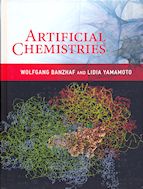
book review: Artificial Chemistries

Wolfgang Banzhaf, Lidia Yamamoto.
Artificial Chemistries.
MIT Press. 2015


[disclaimer: I received a copy from the publisher, in order to write this review for Artificial Life, doi: 10.1162/ARTL_r_00239]

An enormous quantity may be termed “astronomical”, referencing the huge span of time since the Big Bang (~ 1017 seconds), the huge size of the universe (~ 1027 metres), or the huge amount of material in the observable universe (~ 1080 atoms). Yet these quantities pale into insignificance compared to those generated by combinatorics, where numbers are combined using multiplication and exponentiation, leading to an “explosion” in their size. The number of possible proteins of the typical length of eukaryotic proteins is 20400 = ~10520 (although not all of these would have a sensible shape or function); the number of possible memory configurations of a mere 1kB of RAM is 28×2^10 = ~1010^3; the number of books in Borges’ Library of Babel is more than 1010^6 (yet hardly any are interesting books), they can be shelved in ~ (1010^6) ^ 1010^6 ways ways, and even the libraryʼs catalogue is huge; and so on.

Daniel Dennett, in his book Darwin’s Dangerous Idea, uses a clever trick to remind us of the sheer scales involved. He builds up an intuition, or possibly more of a feeling, of such sizes, then dubs these “Vast”, with a capital V. Ever after, the term Vast evokes that sheer scale.

Within the Vastness of all possibilities, only a subset is somehow “interesting”: most is mere noise. This subset may be Vast in its own right, yet Vanishingly Small relative to the Vastness of all possibilities. How to find such Vanishingly Small needles in the Vastness of a combinatoric haystack?
 
One technique might be dubbed “search and construct”. Search for a useful set of atoms, primitives, components, that form the basis of the Vast combinatorial space. Then use rules and processes to define or generate only those constructs with interesting structure and behaviour within that space. For the Library of Babel, the atoms are characters, the Vastness is all possible books of these characters. But what rules delimit the subspace of interesting books, books that are grammatical, readable, and worthwhile? There is chunking to form higher-level components: words. There are syntactic restrictions on the form of sentences, and further semantic restrictions to be meaningful. But to go further, to construct the subset that is literature, say, requires as yet uncodified human creativity. For computer programming, constructing a member of the interesting subset is a slightly easier task. The primitives are the relevant high-level language constructs and their syntactic constraints, the rules include well-formedness constraints and patterns, yet there is still much creativity needed to construct useful programs.

Many researchers turn to the natural world for inspiration. Evolution is one process that explores these interesting possibilities. It can be considered part of a process that searches for genomes, then constructs phenotypes. Interestingness here is viability. A range of artificial evolutionary algorithms take inspiration from these natural processes. In nature, the starting point for evolution is already something quite complex: an organism, even a single-celled organism, is non-trivial, not a random collection of molecules. Can we find a mechanism for generating this initial complexity?

Underlying life is chemistry. Chemistry is combinatorics par excellence. From a small set of atoms, chemical bonding laws produce a Vast set of molecules with structure and behaviour. It has chunking: atoms can form small molecular building blocks, such as DNA bases and amino acids, that are themselves the components in higher level constructions. Good blocks can be searched and selected for by evolution. As we have seen from the protein example above, the larger molecules produced are still a Vanishingly Small subset of the potential Vastness. Not all combinations of atoms can form stable molecules, and not all molecules that can form have a function or structure that can contribute to further construction.

Artificial Chemistry (AChem) takes such ideas from natural chemistry, in order to generate and explore a variety of forms of combinatoric Vastness in silico. If we think of AChems as a generic form of “search and construct” processes, and as rule-based novelty generators, we can see that they can be applied not simply to “chemical” problems, but to a whole range of domains where such processes are needed and used, including computing, dynamical systems, language and music, and modelling in silico and in vitro complex systems.

An AChem provides three components for virtual world explorations. First, there is the material, the virtual atoms and molecules, that provides the Vast combinatorial space of potential structures. Then there are the reaction rules, the analogues of the laws of nature in our virtual world, which define how the material combines and dissociates, and possibly even how the space it occupies is restructured (such as with P-systems). These rules implicitly define a subspace of possible structures in that Vastness. Finally, there is the algorithm, which lays out our explicit experimental setup to explore that implicit subspace, anywhere from exhaustive search to pouring some virtual stuff in a virtual bucket and watching what happens.

Nature provides just the one particular kind of material—real world atoms and molecules—and one set of rules—chemical bonding and reactions that say which molecules are possible, and which are not. The only freedom the scientist has is in the algorithm: the experimental setup that controls which molecules encounter which others, under what environmental conditions. Despite its real-world constraints, chemistry provides all the richness and complexity sufficient for life itself.

The playpen of AChem is even richer, since we also have the freedom to choose different basic material, and different rules. Yet it has the corresponding downside in that we now have to implement the rules, of our virtual world.

This new book forms a comprehensive introduction to many different facets of the discipline of AChem. The plurality in its title, Artificial Chemistries, indicates the diversity of approaches covered. It covers the why, how, and what of the choices of material, rule, and algorithm, and their consequences. For the beginning student, it provides a wide-ranging review of the subject, and its 1000-item bibliography is a marvellous resource in its own right, providing entry into the relevant scientific literature. For the practising AChemist, it provides an invaluable reference material on all topics in the discipline.

Despite its comprehensive nature, this book is no mere “annotated bibliography”: its structure provides a narrative unity for the discipline. Part I comprises four foundational chapters, laying out the philosophy and scope of the subject, illustrated with some simple example AChems. It includes a primer on basic concepts from chemistry, such as chemical reactions, the law of mass action, equilibrium, chemical bonds and catalysis. It also covers differential equation modelling and computational techniques.

Part II comprises four chapters covering the natural world inspiration. It starts with the chemistry of life, that of biochemistry and large organic molecules including proteins, RNA and DNA. The level of detail is useful for showing the underlying complexity and richness of the chemical processes that are frequently abstracted as mere string concatenation. It would probably do students good to review this material again once they have designed their initial AChem, to help them appreciate the simplifications they have made. The next chapter discuss simple cells, including their structure with lipid walls, and their dynamics in terms of metabolism. It includes discussion of autopoeisis, Robert Rosen’s ideas on organisation in living systems, origin of life theories, and more. All this is necessarily brief, as each topic has deservedly book-length treatment elsewhere, and so things can get quite dense in places: the Rosen section in particular will probably be incomprehensible to anyone who has not already encountered the material. But the bibliography will guide the curious reader to further explanations. Next come chapters on evolution and open-ended systems. Open-endedness is the holy grail of AChems: not only can they explore a Vast configuration space, they may be able to grow this very space by opening up new possibilities and dimensions through their own contingent development. These chapters contain a mix of fairly standard material given added value by being filtered through an AChem perspective—for example, evolutionary dynamics is discussed in terms of chemical reactions—and some quite deep and provocative concepts.

Part III comprises three chapters of massive literature review, documenting and categorising AChems into rewriting systems, automata, and bio-inspired. In rewriting systems the reaction rules state how a particular string or other representation is systematically changed into a new form; these include lambda calculi, P-systems, L-systems, and the like. Automata AChems comprise molecules whose atoms are assembly language-level computational instructions: molecular behaviour is given by the execution of these fragments. These include specific systems such as Tierra and Avida, as well as more generic systems such as cellular automata, von Neumann constructors, and all the way up to Turing Machines. The bio-inspired AChems hold more closely to biological mechanisms, such as enzyme reactions, RNA binding, shape-based lock-and-key binding, genetic networks, and swarms. These chapters demonstrate a strength and weakness of AChems: the ability to build yet another arbitrary complex system. Some of these AChems have been examined in detail over a long period of time by research groups; others exist in only a paper or two from a single doctoral student project. These chapters can be used as a reference to find specific AChems, or as a source material for developing new AChems, hopefully as a synthesis and unification of existing ones. Their comprehensive nature can be a problem on occasion: a whole algorithm may be covered in a single spare sentence. Yet the Vast bibliography leads on to more detail.

Part IV comprises four chapters focussing on the global dynamics of general AChems. Whilst parts II and III will be best for students, this part will be of most value to more experienced researchers. First is a chapter on Organisation Theory, written with Pietro Speroni di Fenizio. This looks at conditions for and properties of closed sets of molecules: sets where each molecule is produced by members of the set, and so the reaction network is closed. The following chapter discusses the dynamics of such organisations: effects of reaction rates and probabilities on their construction and maintenance. Next comes a chapter dealing with what for me is the raison d’être of AChems: emergence. It provides a discussion of relevant topics: self-organisation, non-equilibrium thermodynamics, chaos, downward causation, all as they are relevant to AChems. Several deep and important concepts are each outlined in half a page, and the chapter covers a stunning range of topics. The final chapter in this part continues the theme of emergence by discussing constructive dynamical systems: how AChems can produce novelty.

Part V comprises five chapters on applications of AChems to a wide range of domains. Here we get discussion of everything from robotics to unconventional computation, from nuclear physics to economics, from modelling biological systems to synthetic biology.

The book also includes an appendix giving details of the PyCell AChem package, which provides an immediate entry to computational AChems.

This book is really three or more significant books rolled into one, as needed to cover the breadth of the subject. There are interdisciplinary issues here: a practitioner needs to know a lot about a wide range of subjects. As such, it is a remarkable work of scholarship, bringing together a whole host of diverse information, and synthesising it into a coherent and valuable account of the discipline of Artificial Chemistry. I learned a lot from reading it; not just the material that was new to me, but also new ways of looking at known material, and the valuable syntheses of a wide range of concepts. The authors should be commended for their impressive contribution to the field. Any AChemist, ALifer or, more generally, any nature-inspired computer scientist or engineer, will find Artificial Chemistries a valuable addition to their research bookshelf.


For all my book reviews, see my main website.

Friday, 8 July 2016

ALife day 5

ALife day 5; last but not least.

The day started as usual with a fascinating keynote: today it was Linda Smith on “We need a developmental theory of environments”. Linda’s work is on development in human babies. She has gathered a rich corpus of information on babies’ perceived environments over their first two years of life. This has been gathered from head-mounted cameras (which today are so small they are just a chip in a headband), and demonstrate convincingly that the baby’s perceived environment changes dramatically over time, and that those changes are deeply embedded in its development. Early on, there are lots of close up faces, of a few adults. Later on, the baby’s view moves to hands: watching others, and its own, manipulating objects. Different experiments demonstrate the essential nature of the body / brain / environment feedback loop.  What is in this loop changes as the baby grows, and we need to understand when and how. And, of course (unless you are purely into how to experiment on babies for fun and profit), what does this tell us about developmental artificial life? The (perceived) environment is crucial to development.

I then went to the morning technical session on Artificial Chemistries, a potential substrate for ALife. We started with a talk on a novel replicator system based on a chemistry of functional combinators, with conservation of mass. The crucial design tradeoff is not to make the underlying artificial physics so strong that replication is trivial (a “copy organism” operation in the physics), nor to make it so sparse that replication is computationally infeasible. One way to strike the happy medium is to ensure the “functional units” are composed of a few “primitive units”, giving the system a small but crucial distance from the “atoms”. Next we heard about an extension of Hutton’s original replicator AChem, adding kinetics under the Gillespie algorithm, to find a “sweet spot” where a rich set of reaction occur in a computationally feasible time. Then we heard about “messy chemistries”, those that produce a wide range of uncontrolled products, and the conditions for one of the products to come to dominate, suggesting a “selection-first” AChem route to ALife. Then we had a description of a reaction-diffusion system incorporating energetics, and how a combination of exothermic and endothermic reaction systems can stabilise temperature across a region. Finally, we heard about taking mathematics seriously in order to use algebraic concepts, particularly non-associative algebras, to design a novel sub-symbolic AChem.

Then on to the closing keynote of the conference: Katie Bentley on “Do Endothelial Cells Dream of Eclectic Shape?” She explained the title: her work is about computational modelling of real biological systems, based on computational complex systems approaches. She had been warned biologists wouldn’t read something with the word “computational” in the title, so needed to use just biological words. But she wanted to signal to the CS-types that this might be of interest to them too, so used the punning title. She asked us if we got the pun: all but one hand went up. She then asked that person if they had seen the film; yes. She told us that if this was a straight biological conference, no one would have got the pun, and hardly anyone would have seen the film. Divided communities indeed. She went on to describe her computational model of vascular growth, in normal tissue and in tumours. Agent Based modelling, combined with real data and close interactions with biologists (who know which published results to trust, and which not), have resulted in several predictions that have been tested and confirmed in the wet lab. Mostly information flows from biology to ALife; this work demonstrates a great feedback from ALife into biology.

Then it was all over bar the closing ceremony: information about the International Society for ALife, the next two ALife conferences (ECAL 2017 in Lyon, France; ALife 2018 in Japan), and a variety of awards for best papers, lifetime achievements, and contributions to the community.

A truly excellent conference, in content and in organisation. I had a wonderful time, and my head is buzzing with ideas and connections. My neural pathways have been exercised and reconfigured. I need to go home and process all this information further.

Next year in Lyon.


Saturday, 16 January 2016

Pharaoh’s Serpent

Watch mercury(II) thiocyanate burn. Complex chemistry in action: and it’s not even organic chemistry!


For all my social networking posts, see my Google+ page

Monday, 6 April 2015

EasterCon Monday

Final mushroom-soaked breakfast, final day at this year’s EasterCon.

First up, a panel on Faeries: The not-so-nice creatures at the bottom of the garden.  In particular, fairies were originally quite nasty, but “tweeification” (it’s a word now!) has made them smaller and somehow less threatening.  Or is it the fae themselves corrupting out image of them, so they can get closer?  Is it them persuading us to replace iron with plastic?  Barrie knew a lot of historical folklore: he had Tinkerbelle as a murderous little thing, and Disney kept a lot of that.  But the fair folk are not evil as such: they just have a completely different moral code, incomprehensible to us, which they stick to rigorously.  This makes them hard to deal with.  “I wish the goblins would take my baby brother.”  So why do you get so upset when the goblins help you out by fulfilling your wish?

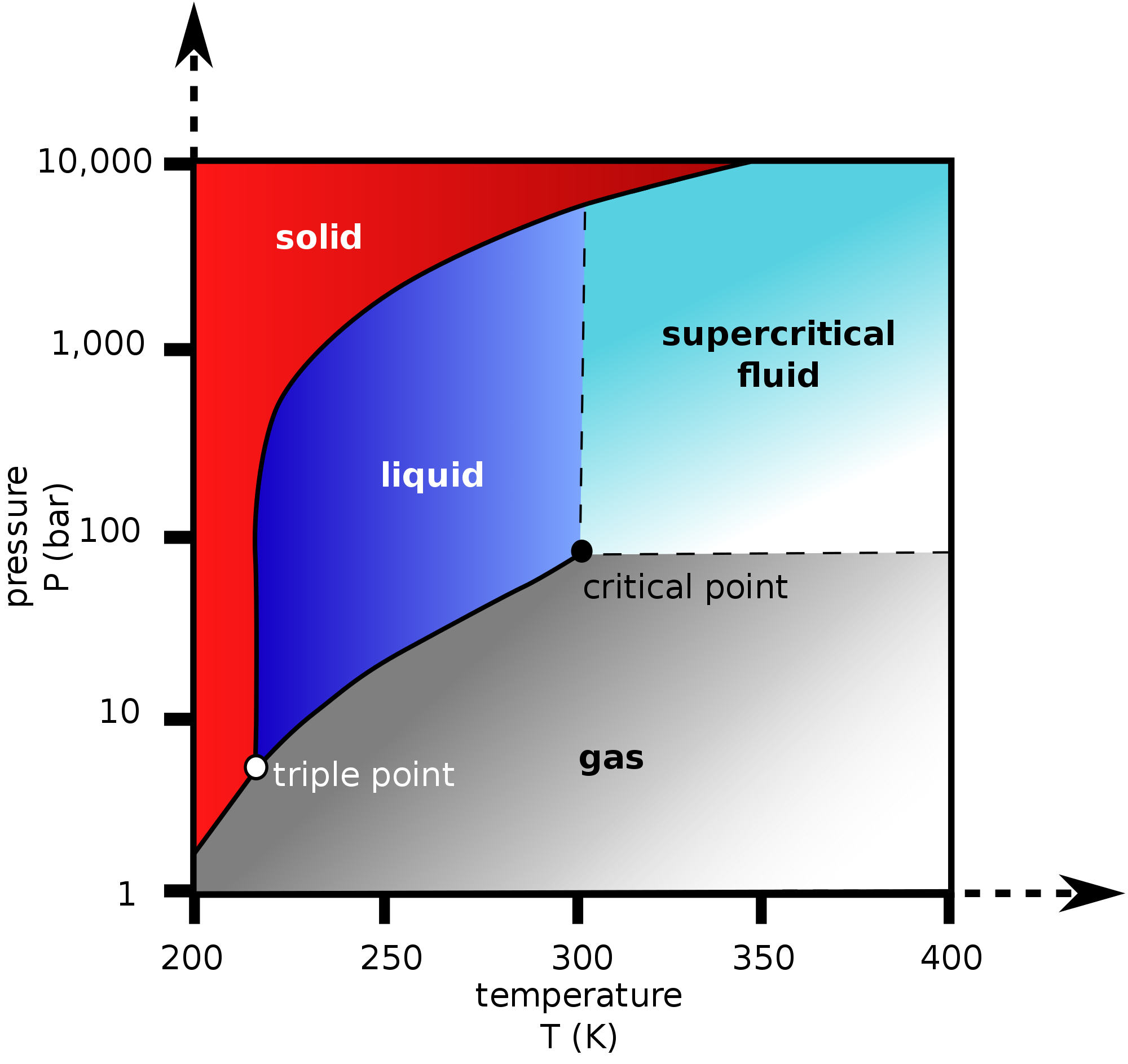
This year’s George Hay Memorial Lecture, To the stars and beyond – making the most of what we have, was presented by Anna Croft, on green chemistry.  “Chemistry: the science of things that are taken for granted.”  We will have limited resources on other worlds, and will have to make the most of what we have.  We are starting to do that now.  Fossil fuels are the basis of a $3tn chemical industry, irrespective of the fuel economy.  We need to replace volatile organic solvents.  There is a lot of interesting progress with using carbon dioxide in its supercritical phase, where it has both liquid properties of a solvent and gas properties so it can permeate into small spaces; it leaves no toxic residues and is recyclable.  The other big advance is ionic liquid solvents.  These are non-volatile, non-flammable, and there are over a million different types, compared to ~200 organic solvents. Some are switchable, between miscible and non-miscible forms, so no distillation is required. Then there’s 3D printing with dissolved Yak wool keratin…

We ended on a high note: a panel called Not For The Squeamish.  It wasn’t for the squeamish. Dr Bob talked about her work watching dead animals rot for a living, taking living things and turning them into fossils; the smell of rotting squid can’t be removed from glassware, even after an industrial acid dishwash.  Necrotising fasciitis smells very bad.  “Gangrene has a very distinctive smell and taste: I’ve tasted my own gangrene.”  “You win!”  Seanan McGuire (in her Mira Grant persona) just wanted to listen to doctors talk about dead stuff.  Nevertheless, she told us about the “six perfect poopers” in the US: they have never had a course of antibiotics or gastric infection, and they are vegan (so have never eaten antibiotics in meat), a great source for fecal transplants.  They want to sample the Amish, who eat meat, but without antibiotics.  A slightly less squicky factoid: archaeologists fall into two groups when they find unexpected bodies: they either faint or run away; or go oooh! and steal the skulls.

So, another great EasterCon ends.  Time to check out and drive home.  The hotel was straightforward to find; escape was not so easy.  I took a wrong turn, and was inexorably funneled into Heathrow’s short stay car park.  However, once exited from that maze, the route was straightforward, and the M25 less clogged than on Friday.  Next year, Manchester.