Monday, 30 June 2014

duvets? just say no!

We gave up on using a duvet years ago, because it is simply too hot, and with no fine control. (I recall a novel that described an overbearing parent as like a duvet: “soft and sweet, and full of icy draughts at the edges”.)

Glad to know that if we hadn’t, I’d be fatter, itchier, and tireder!


(via Danny Yee’s blog)

For all my social networking posts, see my Google+ page

10 years of Cassini

I remember when Saturn was a fairly fuzzy blob with a few rings, and its ten (yes, just ten!) moons were mere dots.  We’ve come far, and gone far.

Phil Plait collects 10 great images of Saturn from Cassini.


For all my social networking posts, see my Google+ page

change blindness

I went to a fascinating seminar by Professor Stephen Tipper last week.  It was about how perception (mostly vision described here) and action deeply influence each other.  There were lots of fascinating examples (with predictions backed up by clever experiments):
  • Moving your finger clockwise or anticlockwise can change the apparent rotational direction of some flashing spots.
  • Merely looking at a picture of a footballer v a tennis player activates your foot or hand mirror neurons respectively (although I personally didn’t even recognise the photos!).
  • Watching someone perform a movement fluently v more awkwardly can affect your emotional response to them positively or negatively respectively (does this mean my left-handed self shouldn’t write on a whiteboard in front of my predominantly right-handed students?).
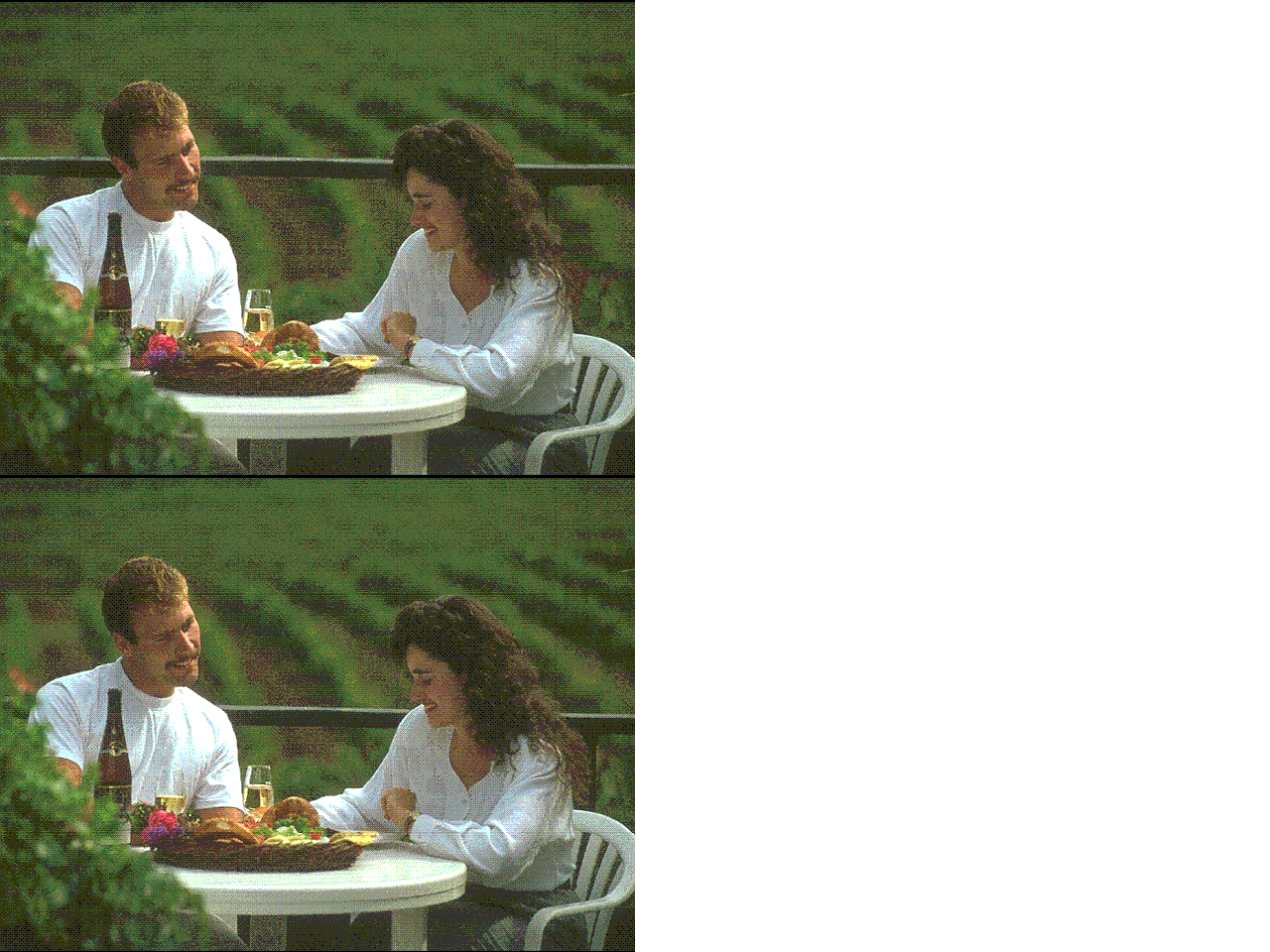
One aspect that caught my attention was the illustration of change blindness: how quite large changes in a scene are completely invisible, until eventually seen, at which point they cannot be unseen.  One of the examples shown was "couple at dinner".


The version above is taken from a webpage on a talk by J. Kevin O’Regan  and Alva NoĆ«.  It seems to be flashing slower than the example in the talk, and I can’t tell if it still works, because now that I know the change, I can’t unsee it!  However, that page has several other examples, which did all work for me.

After talks like this, I never want to trust anything I see again!  But what really caught my attention about the change blindness segment of the talk was a seeming contradiction between what I was witnessing here, and something I’ve experienced before.  A blink comparator is used in astronomy to  to detect planets and other rapidly moving bodies.  Two images of the night sky are switched back and forth, and any object moving against the essentially motionless stars leaps out to the viewer.  How can a blink comparator work if we suffer from change blindness?

I asked Stephen about this after his talk.  The answer: it’s all in the timing.  The blink comparator blinks faster than do the change blindness images.  Blinking fast enough engages our motion detectors; blinking slower does not, and we become change blind.

Amazing.

Sunday, 29 June 2014

but I can't recognise people...

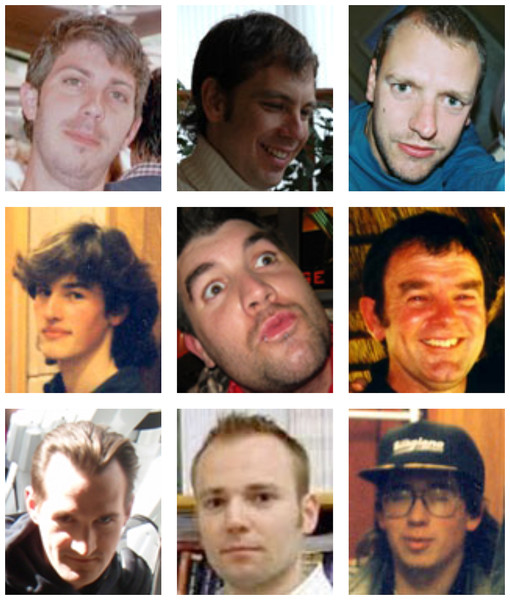
Given how bad I am at recognising people, that’s me locked out of computers, then!

never seen you before in my life


For all my social networking posts, see my Google+ page

rainbow colour maps

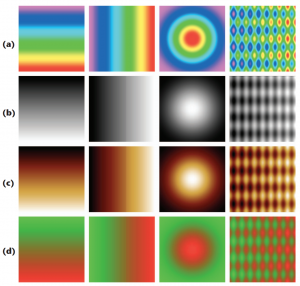
Many many years ago (long before the web was available to give me advice) I discovered a problem with rainbow colour maps that I haven’t seen mentioned elsewhere.  (There are many other problems.)

(a) rainbow, (b) gray-scale, (c) black-body radiation,
and (d) isoluminant green–red color maps
I was using a rainbow colour map to indicate “heat”, so, of course, I used red for the cool end, and blue for the hot end.  I was told by my then-manager that this was counter-intuitive.

Depends on the intuition, I suppose… 

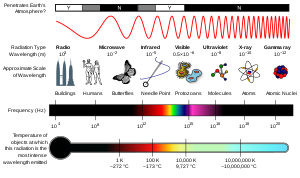
note the direction of correlation between the temperature and the colour bar


For all my social networking posts, see my Google+ page

Saturday, 28 June 2014

Euclidean geometry

I saw this interactive geometry game on BoingBoing recently.  I’ve just completed the final level 20.  It’s great fun.  The final couple of levels did have me scribbling on pieces of paper and muttering for a bit.  (Well, it has been a while since I left school!)


For all my social networking posts, see my Google+ page

visualising algorithms

Mike Bostock has some beautiful algorithm visualisations, not only of the ubiquitous quicksort and mergesort, but also of sampling, shuffling, and maze generation.

progression of a randomised depth-first traversal maze generation algorithm


For all my social networking posts, see my Google+ page